THE HOUSTON CHRONICLE PRINTING PRESS
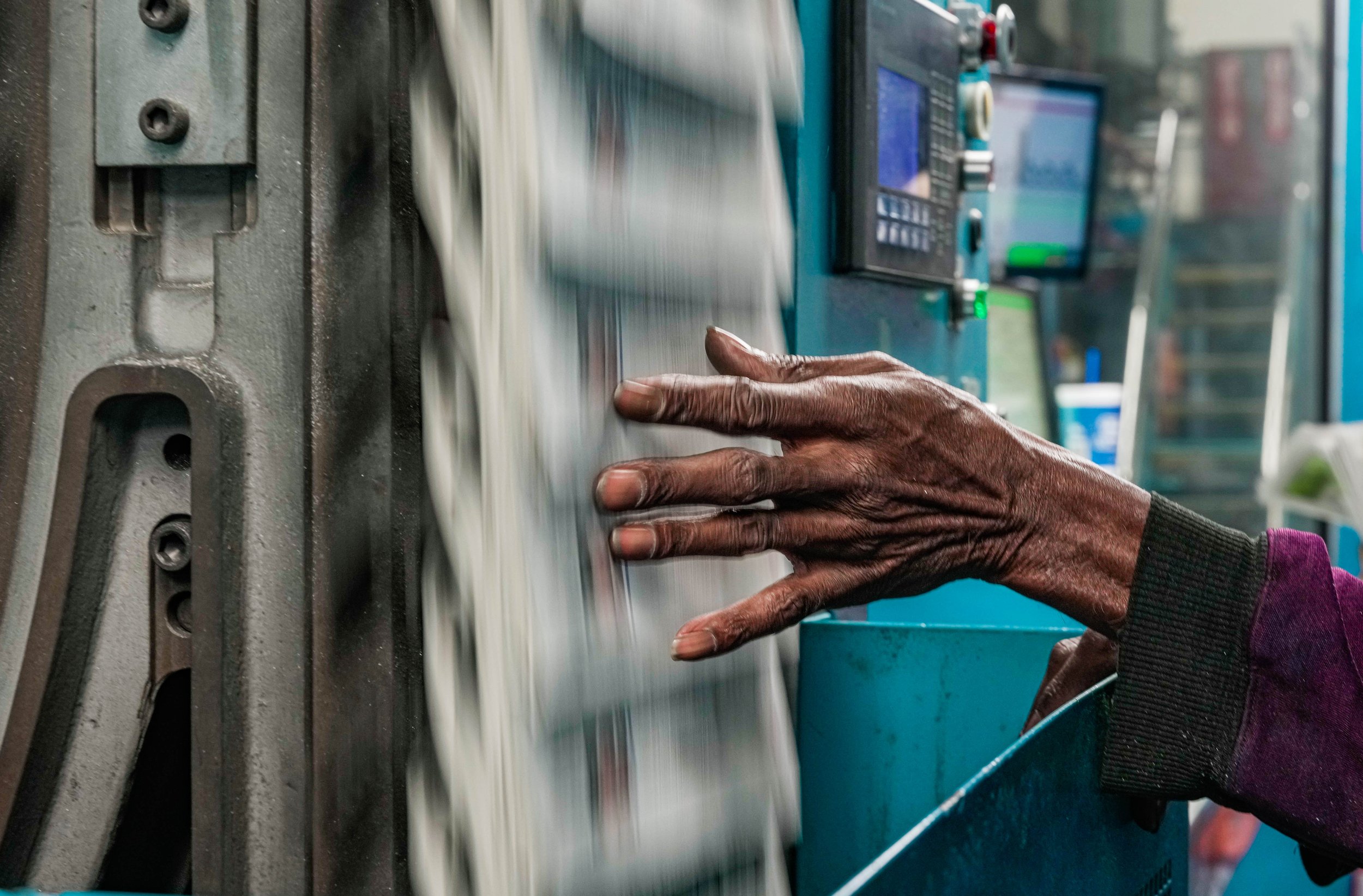
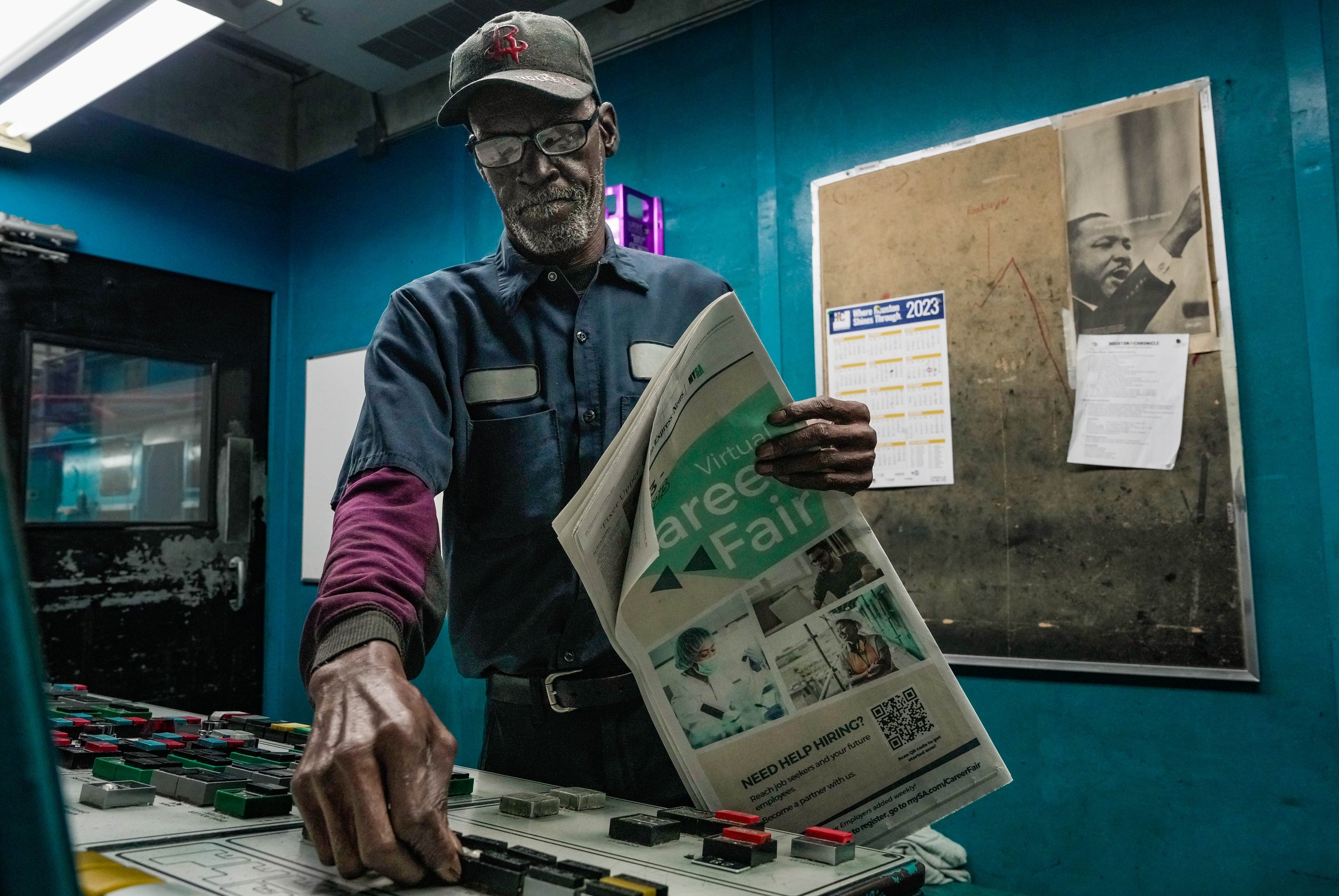
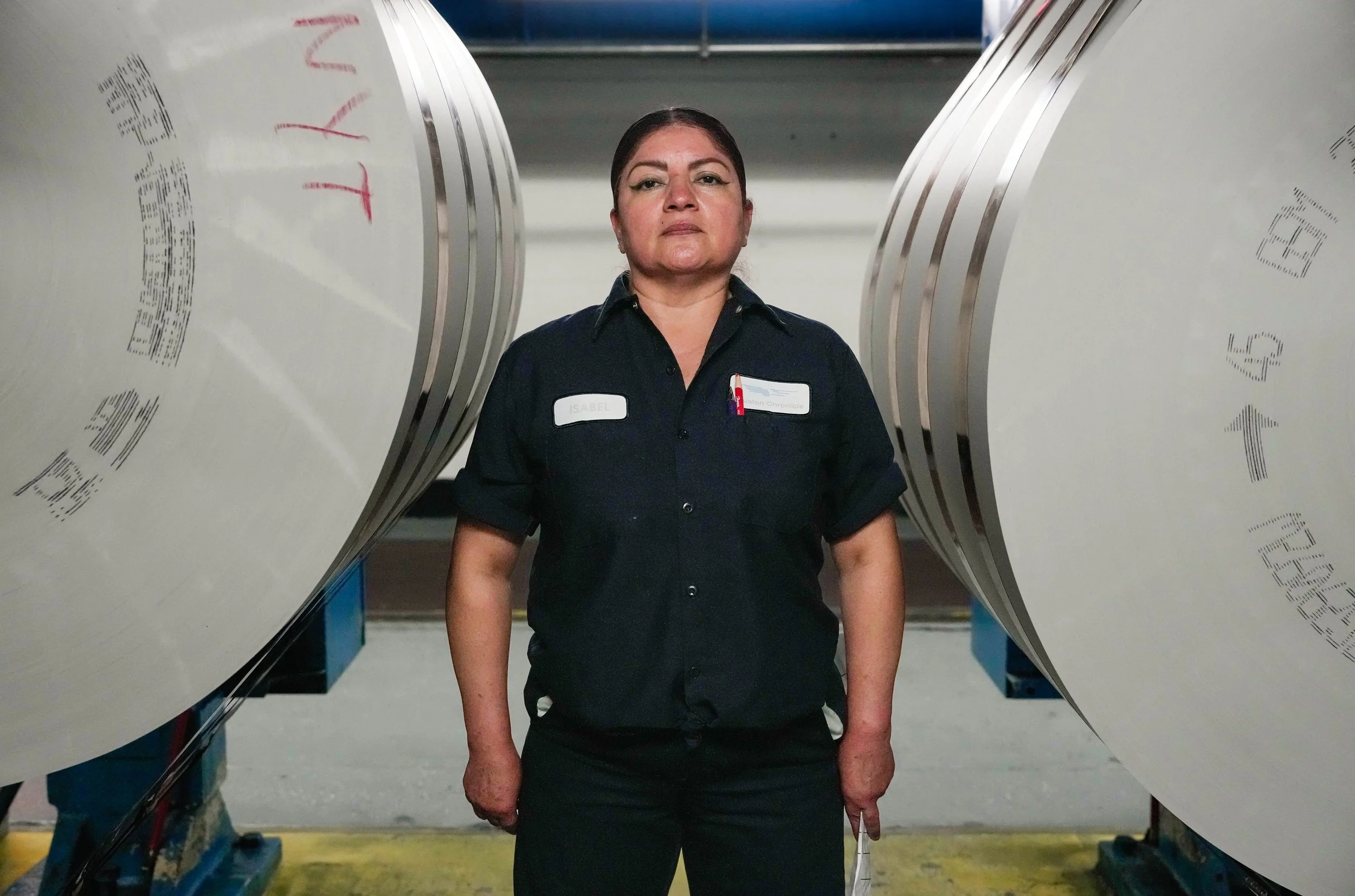
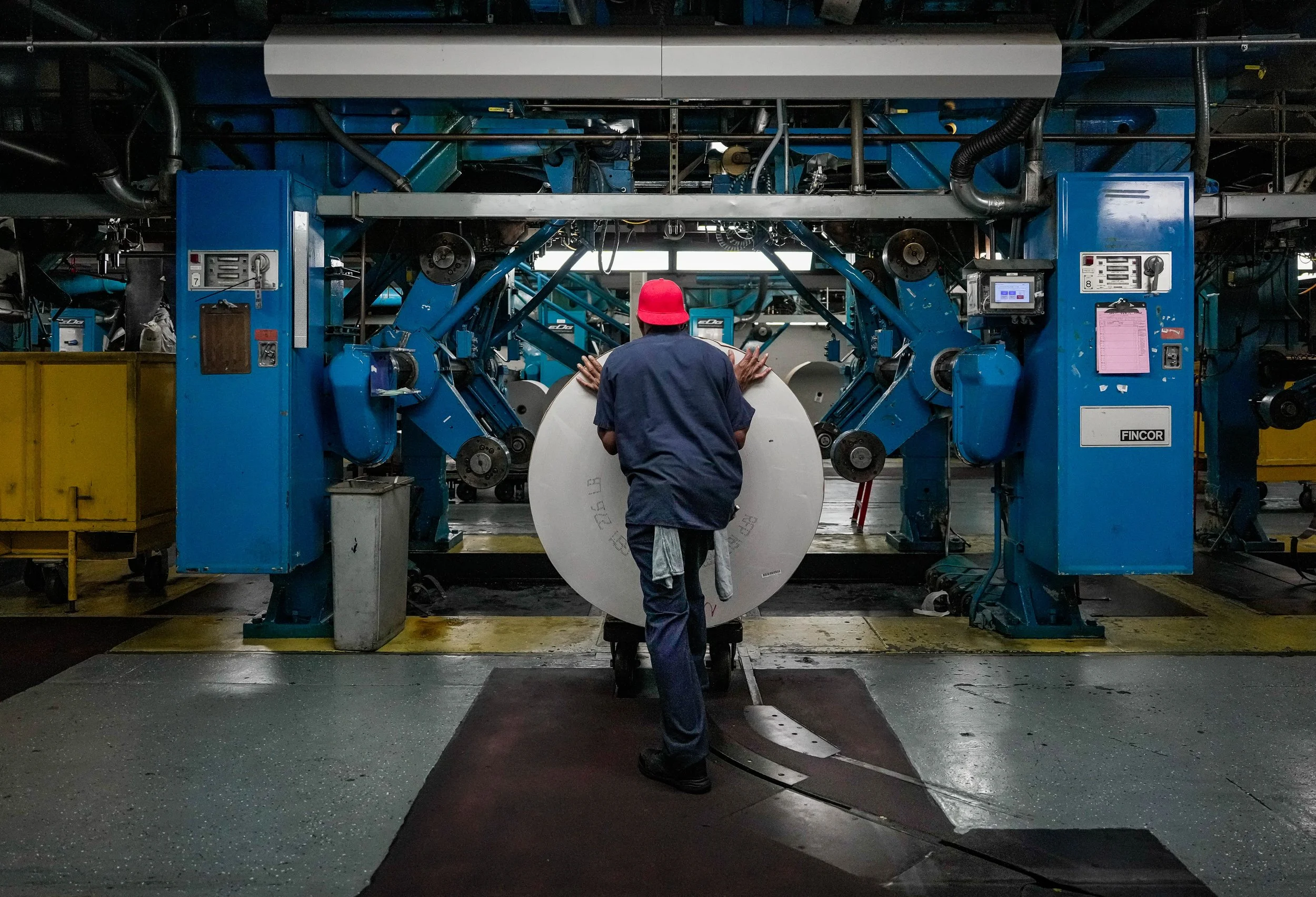
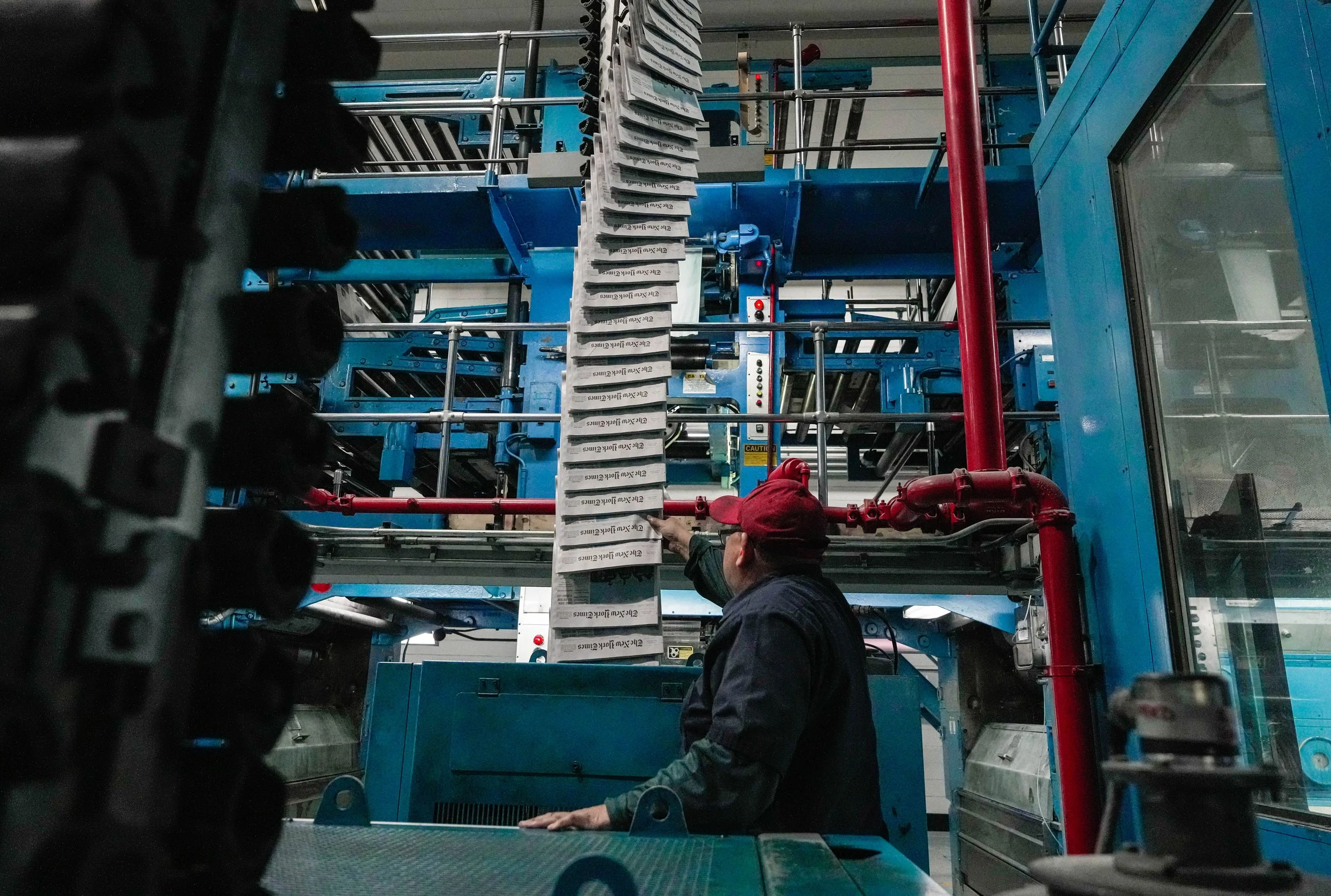
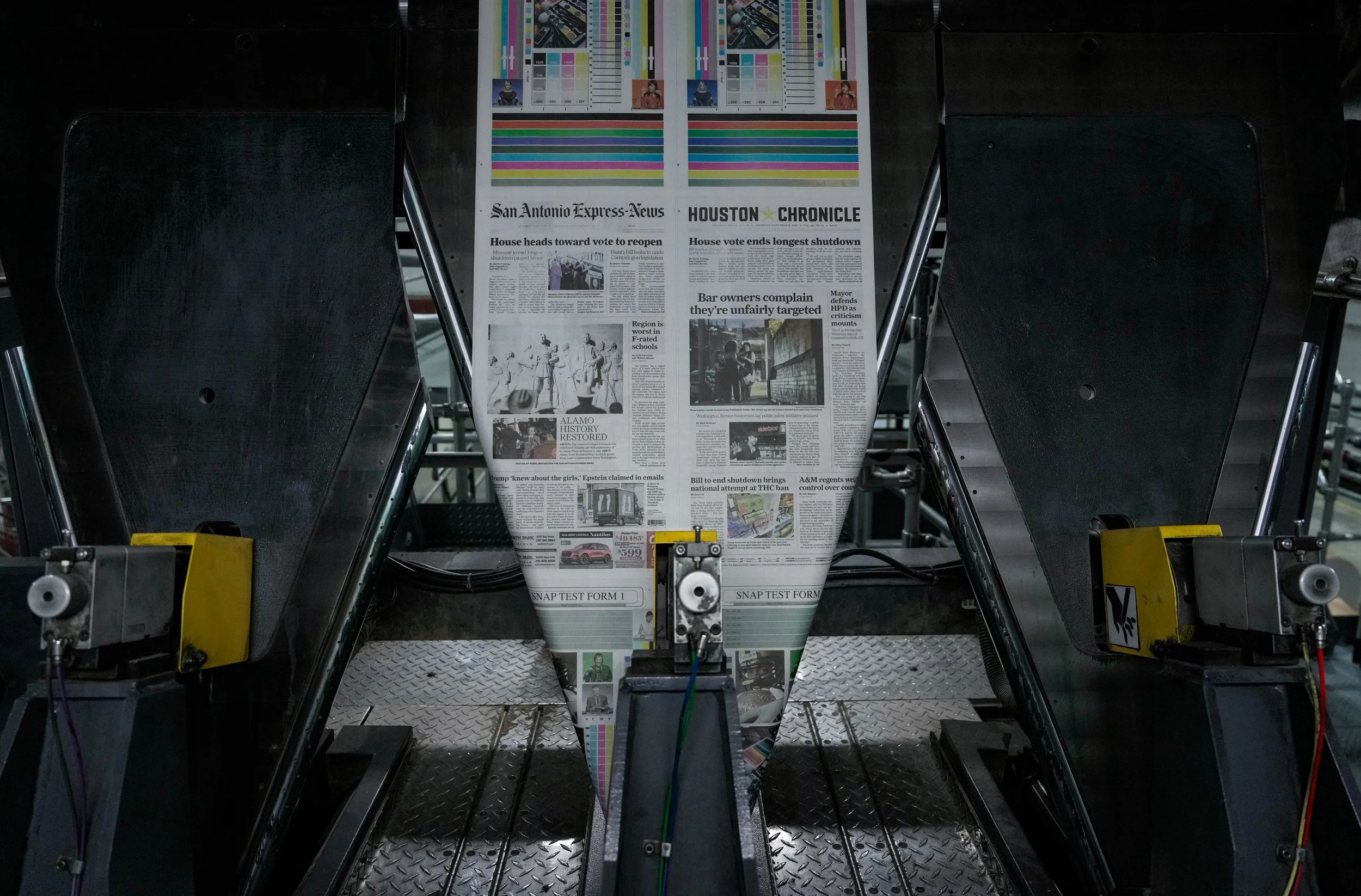
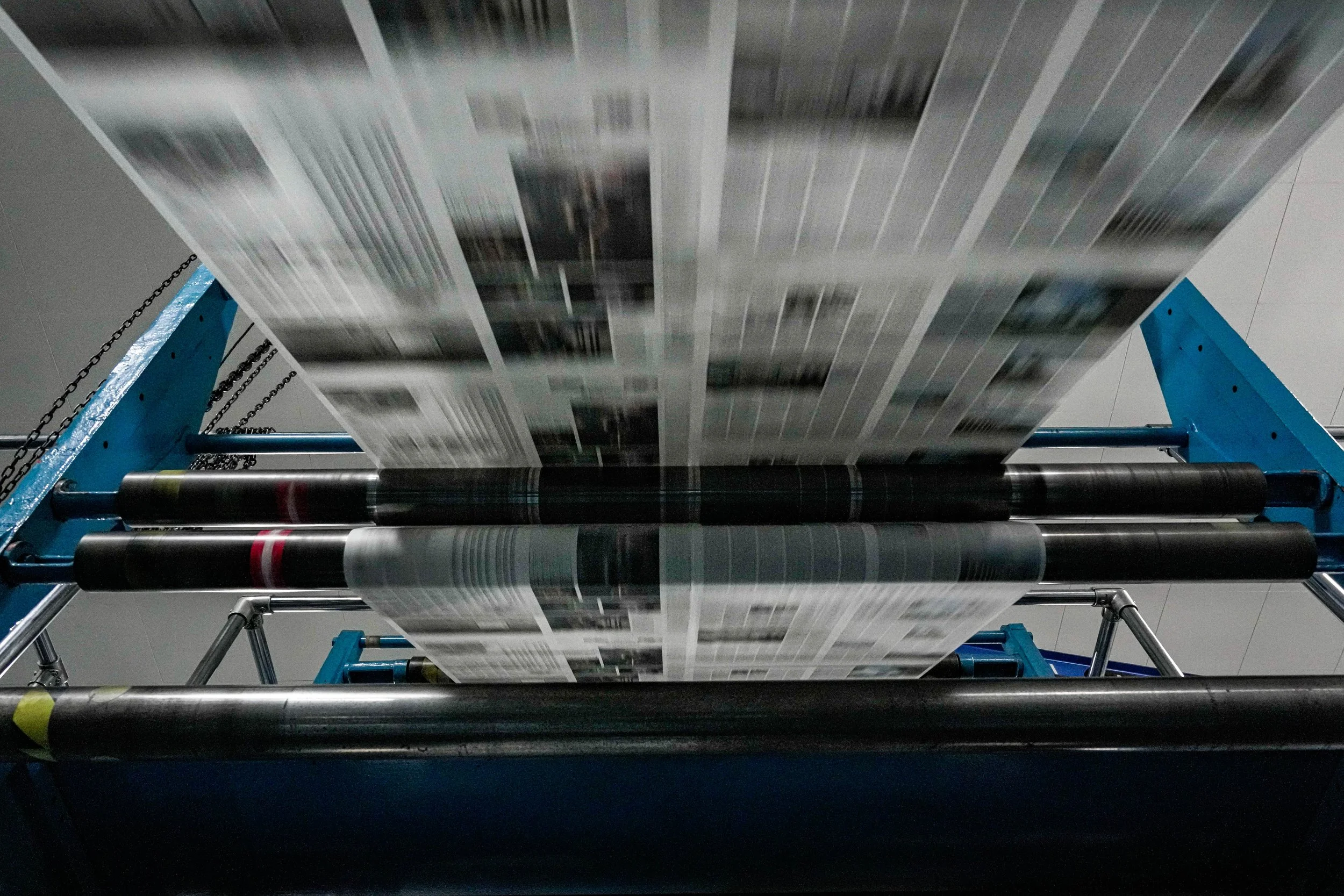
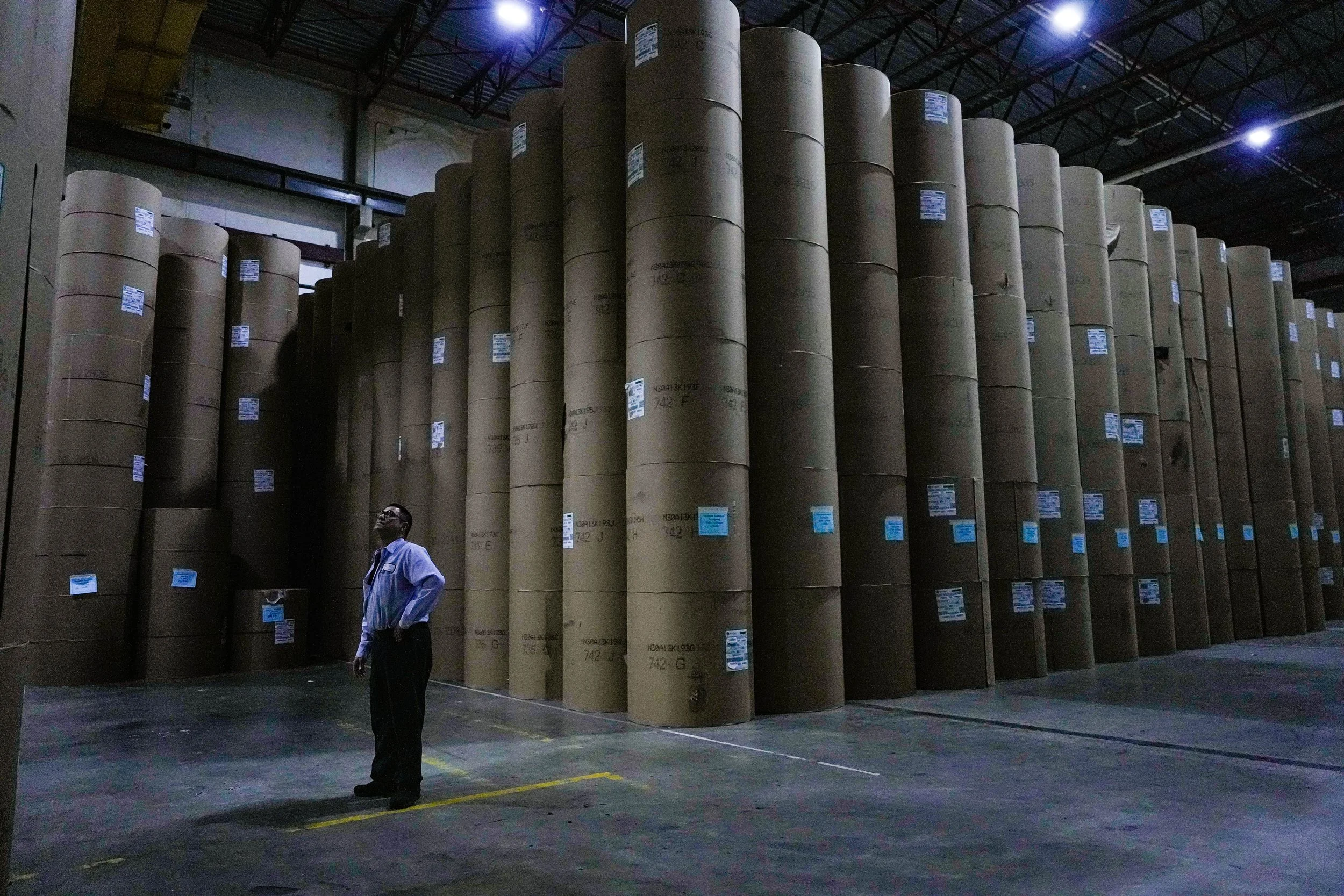
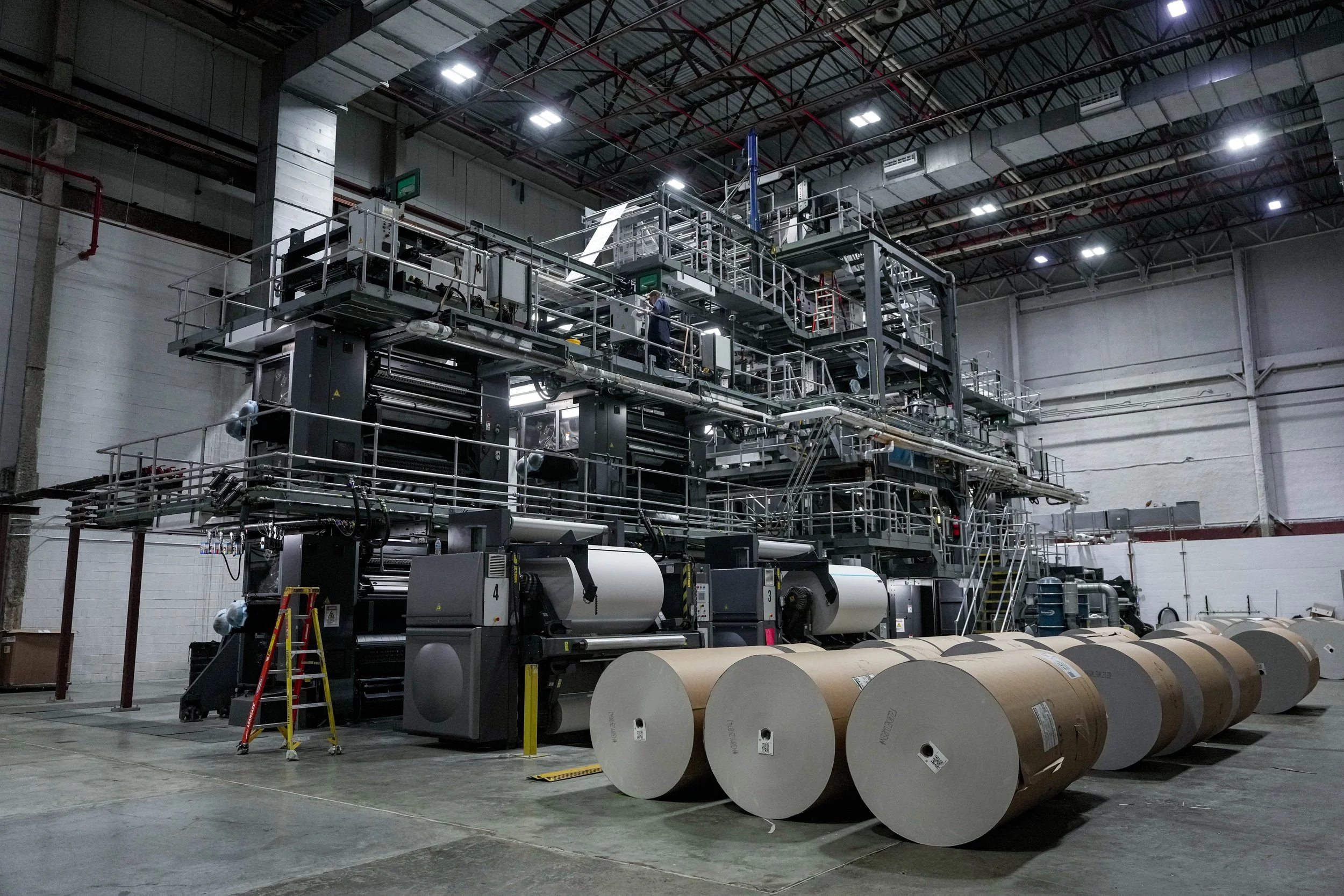
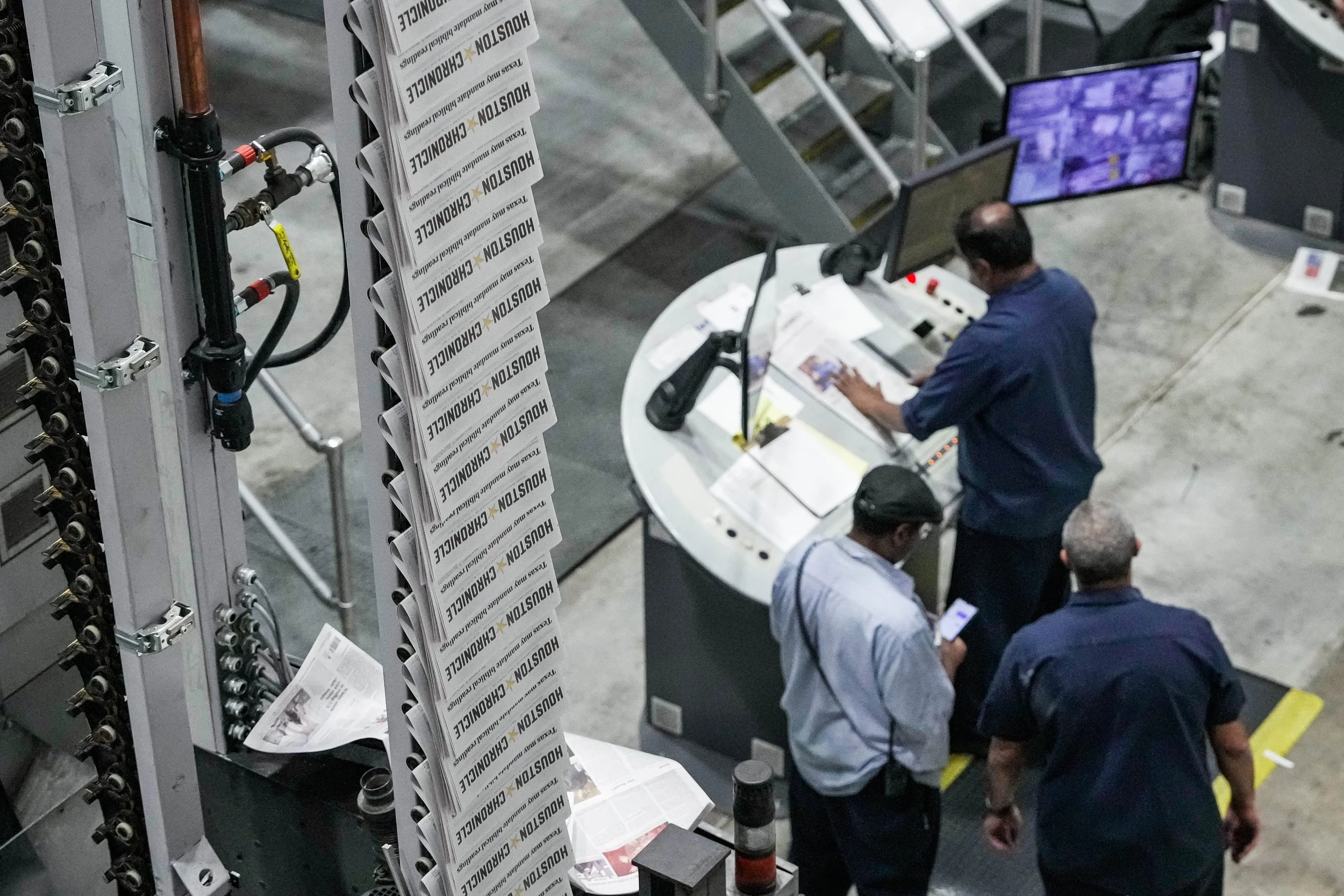
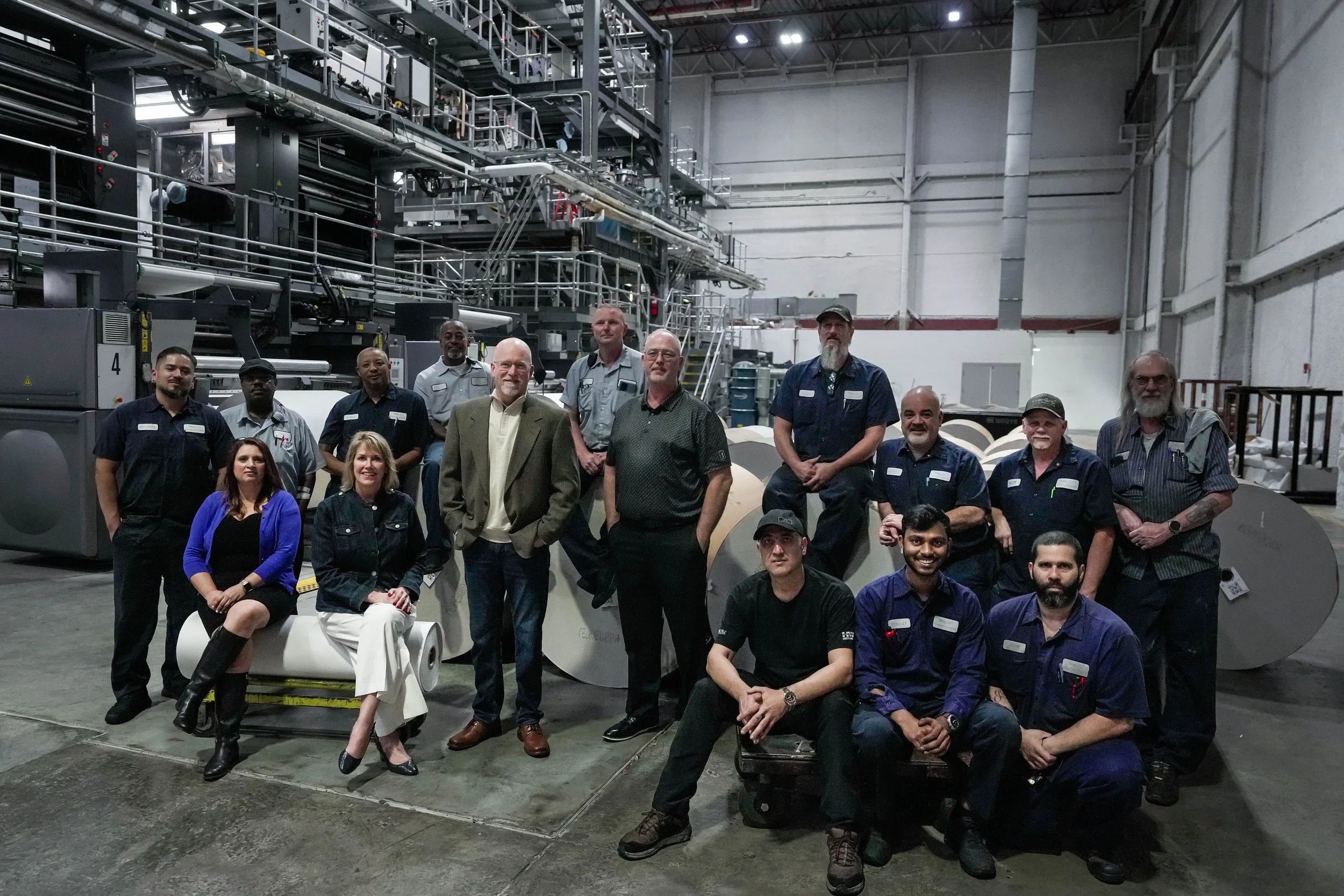
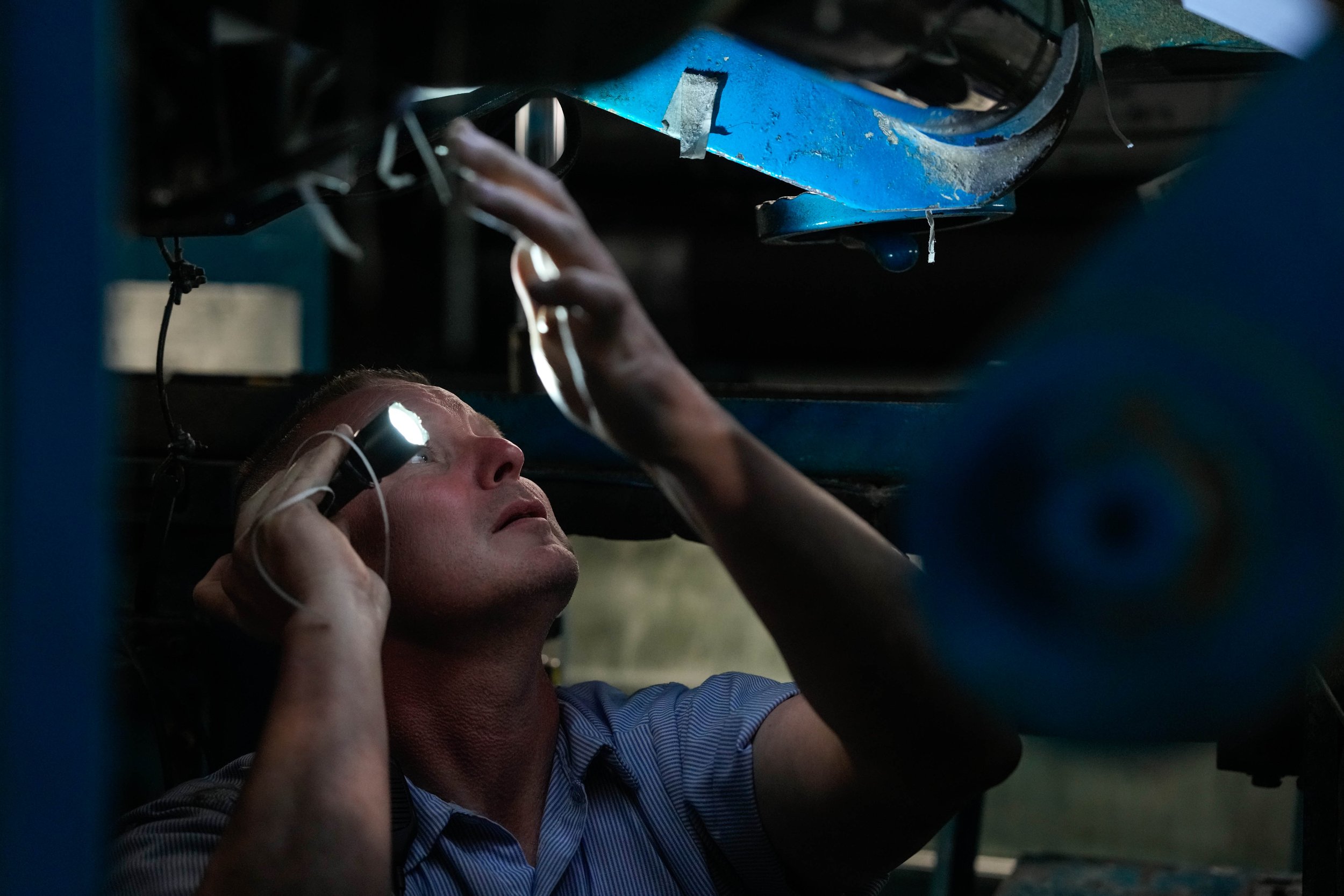
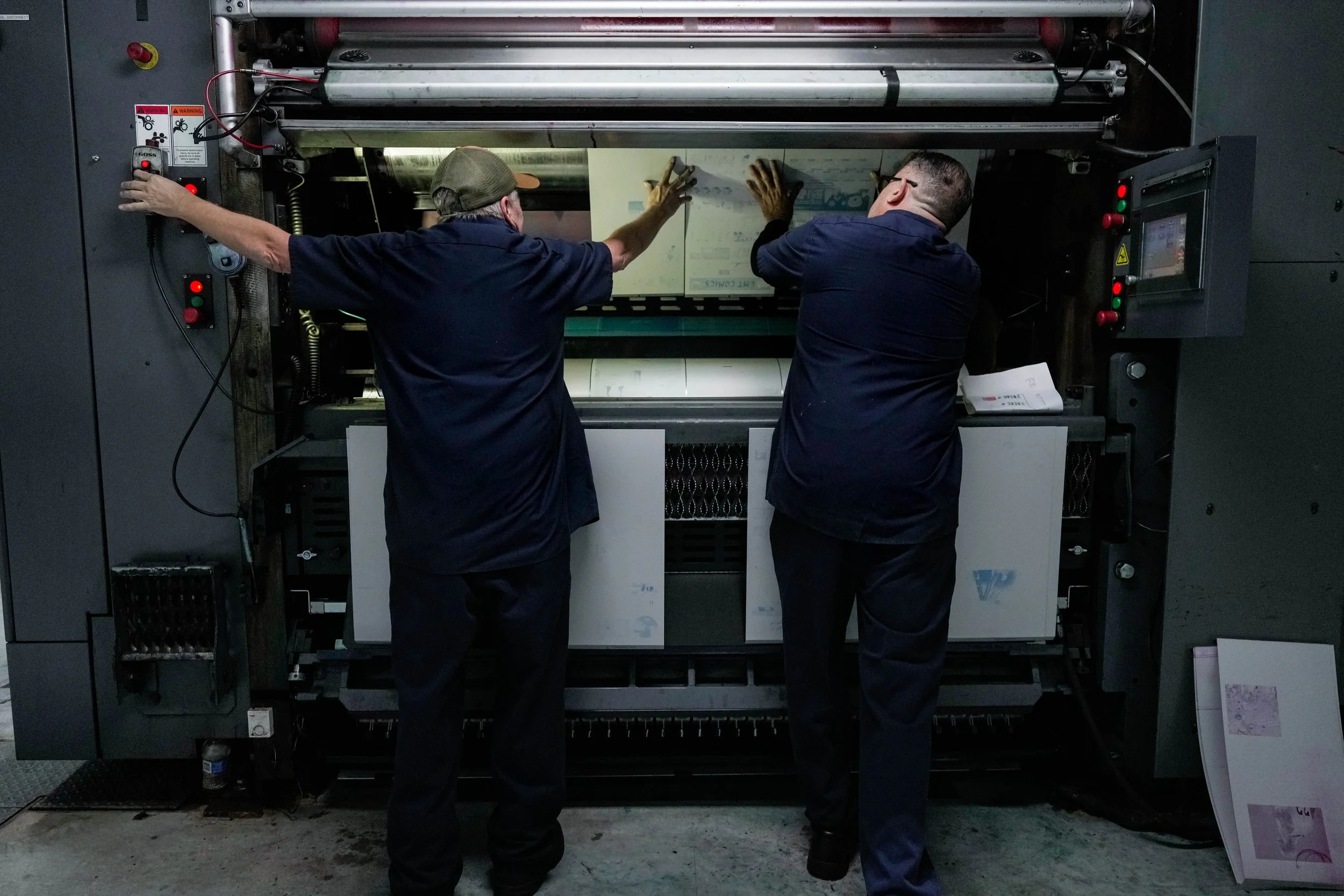
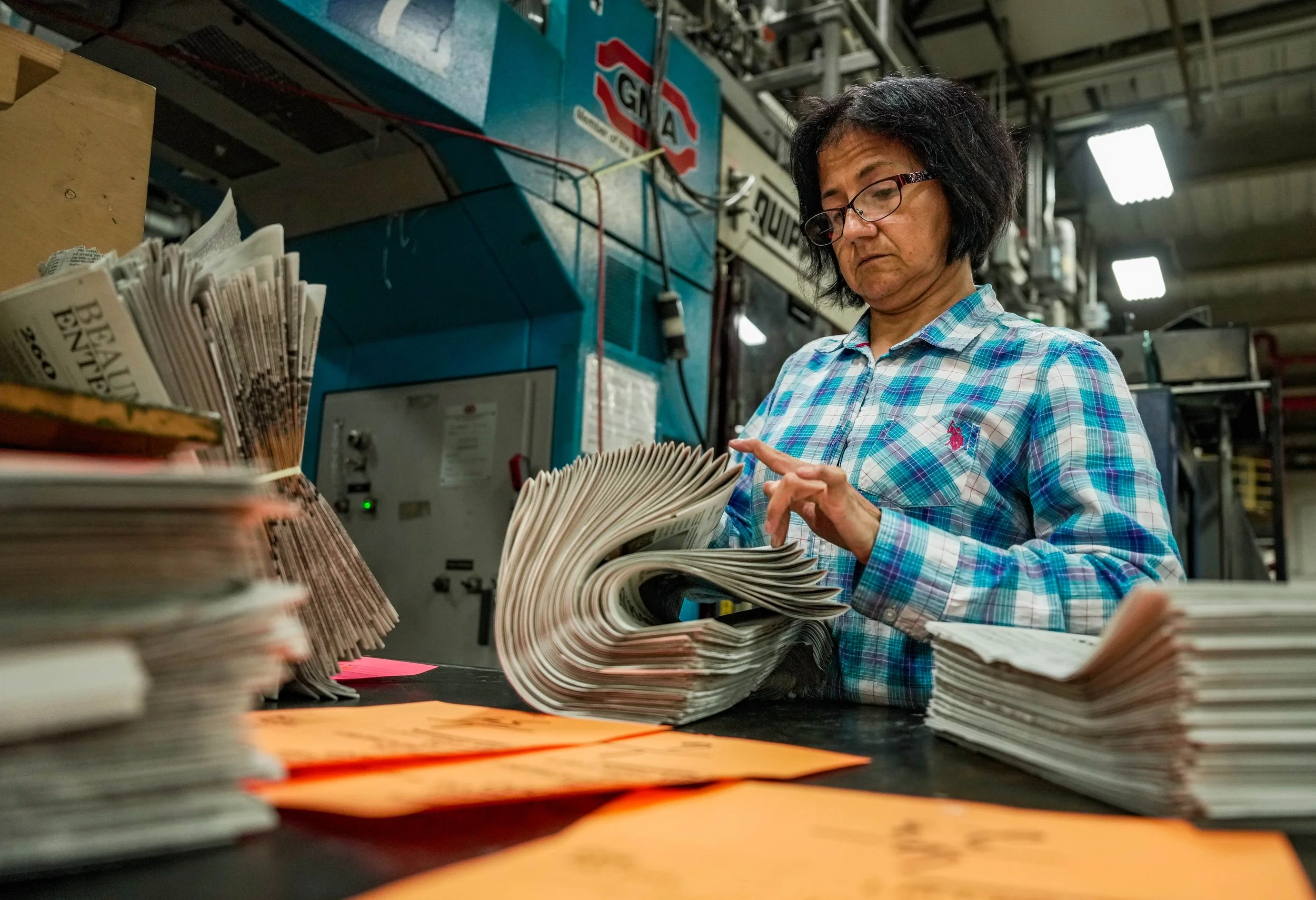
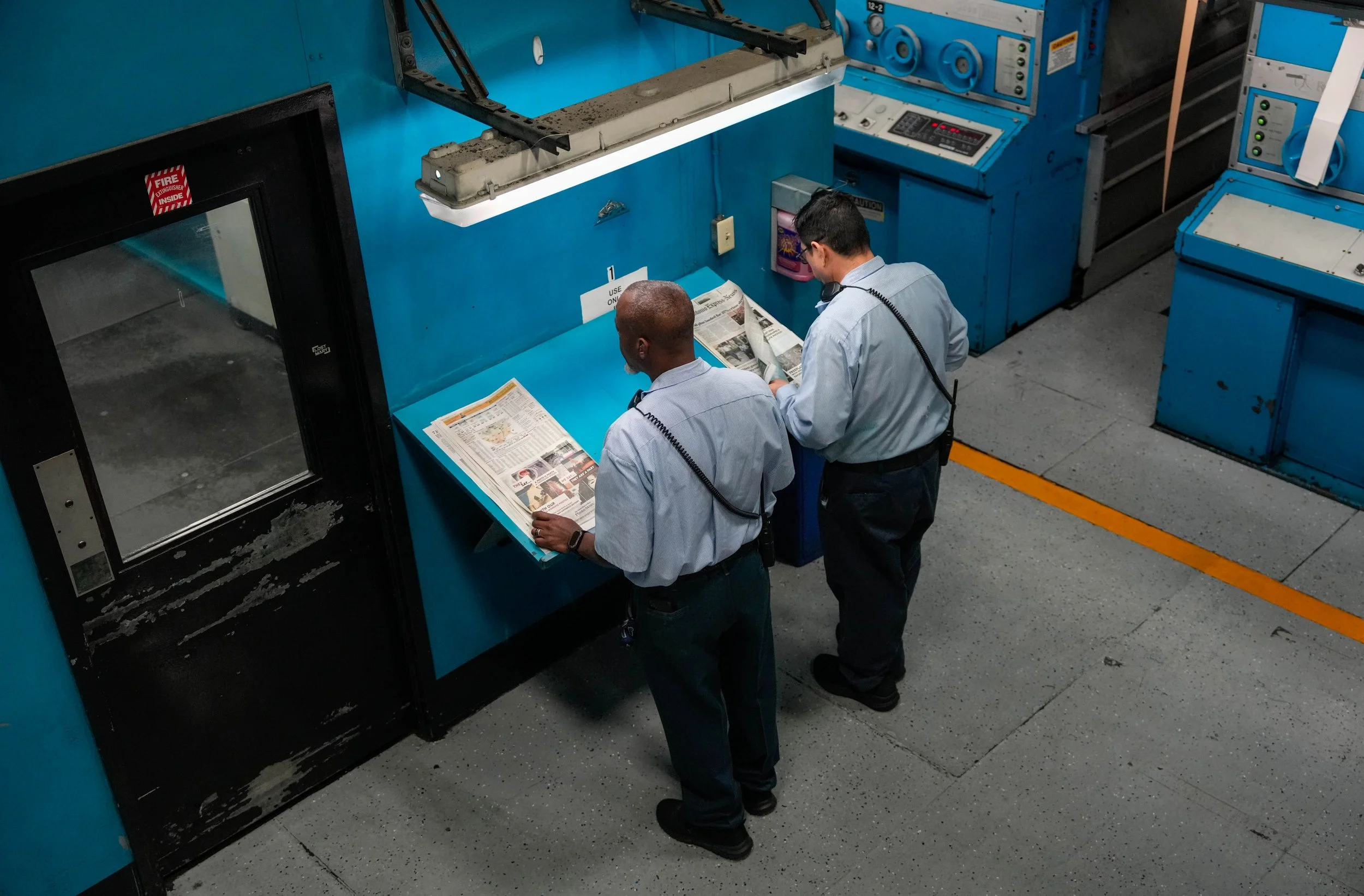
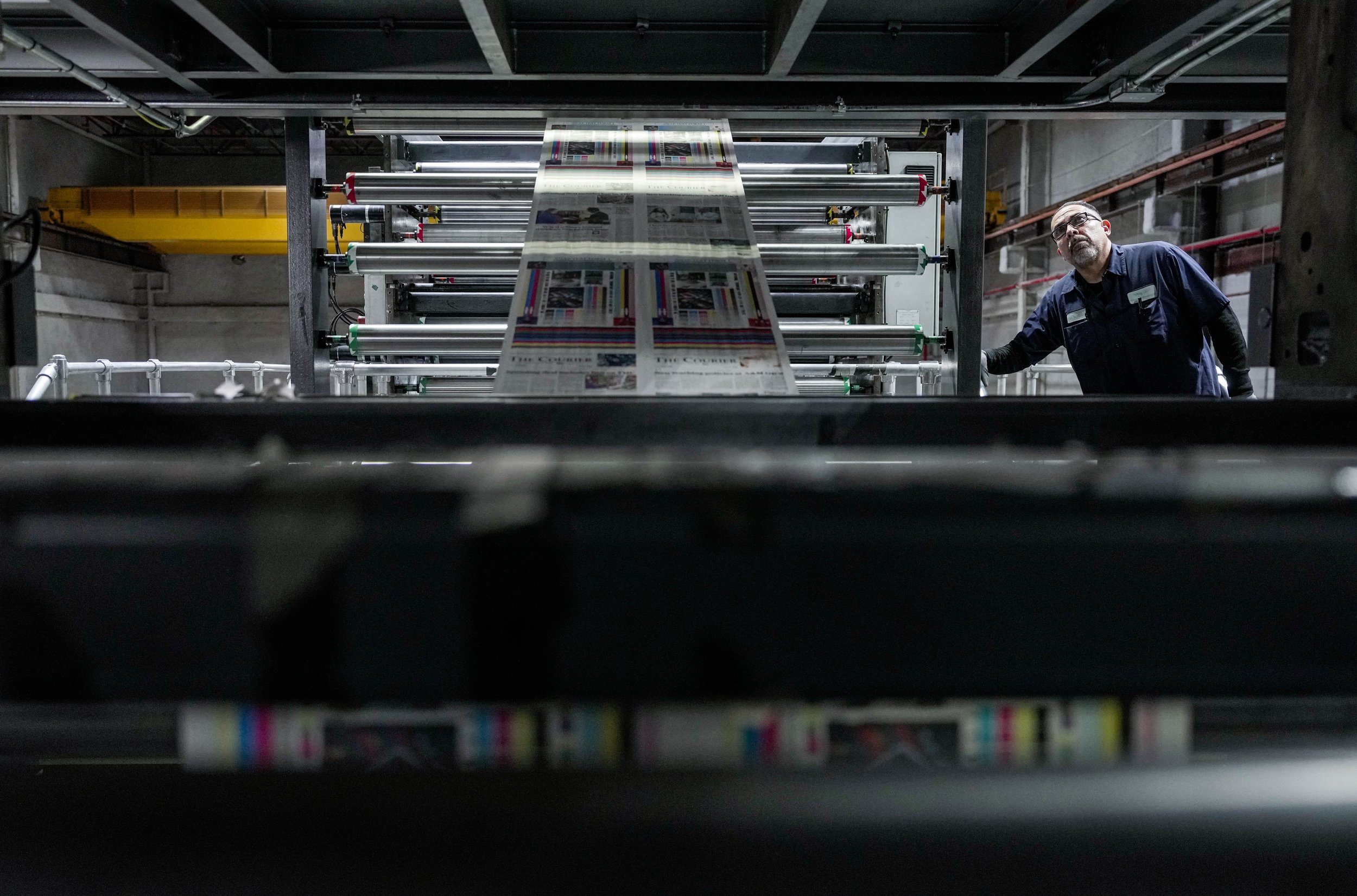
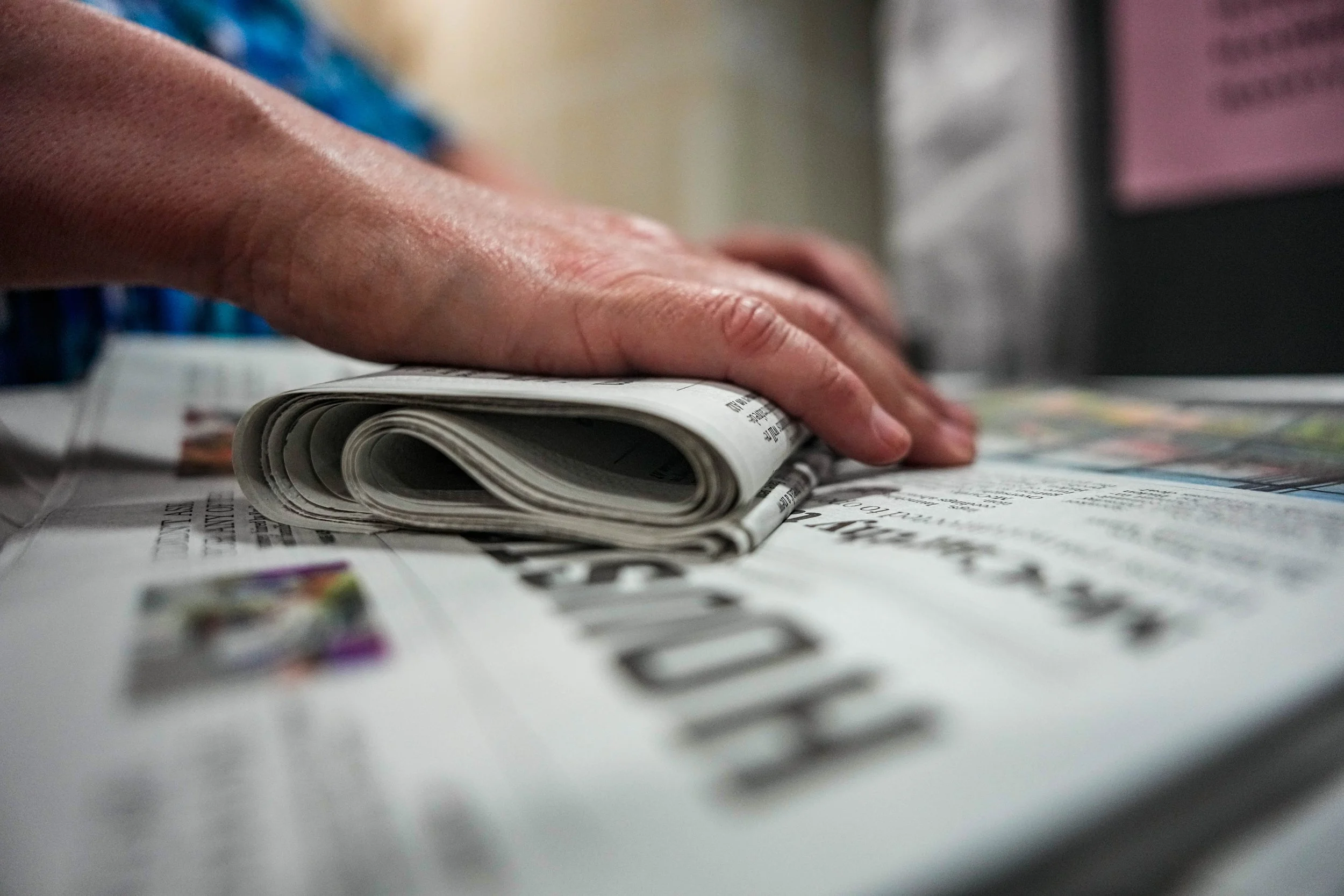
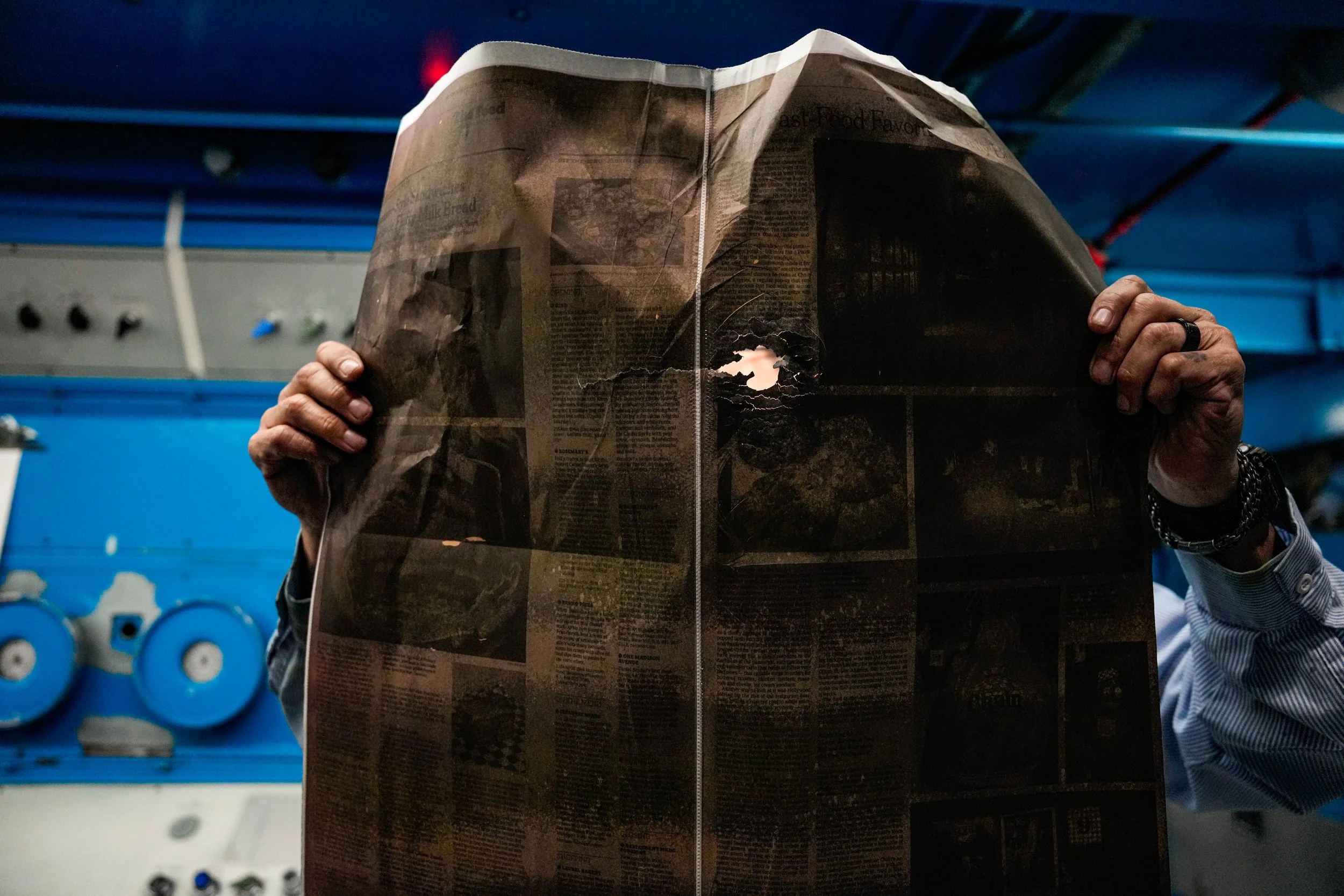
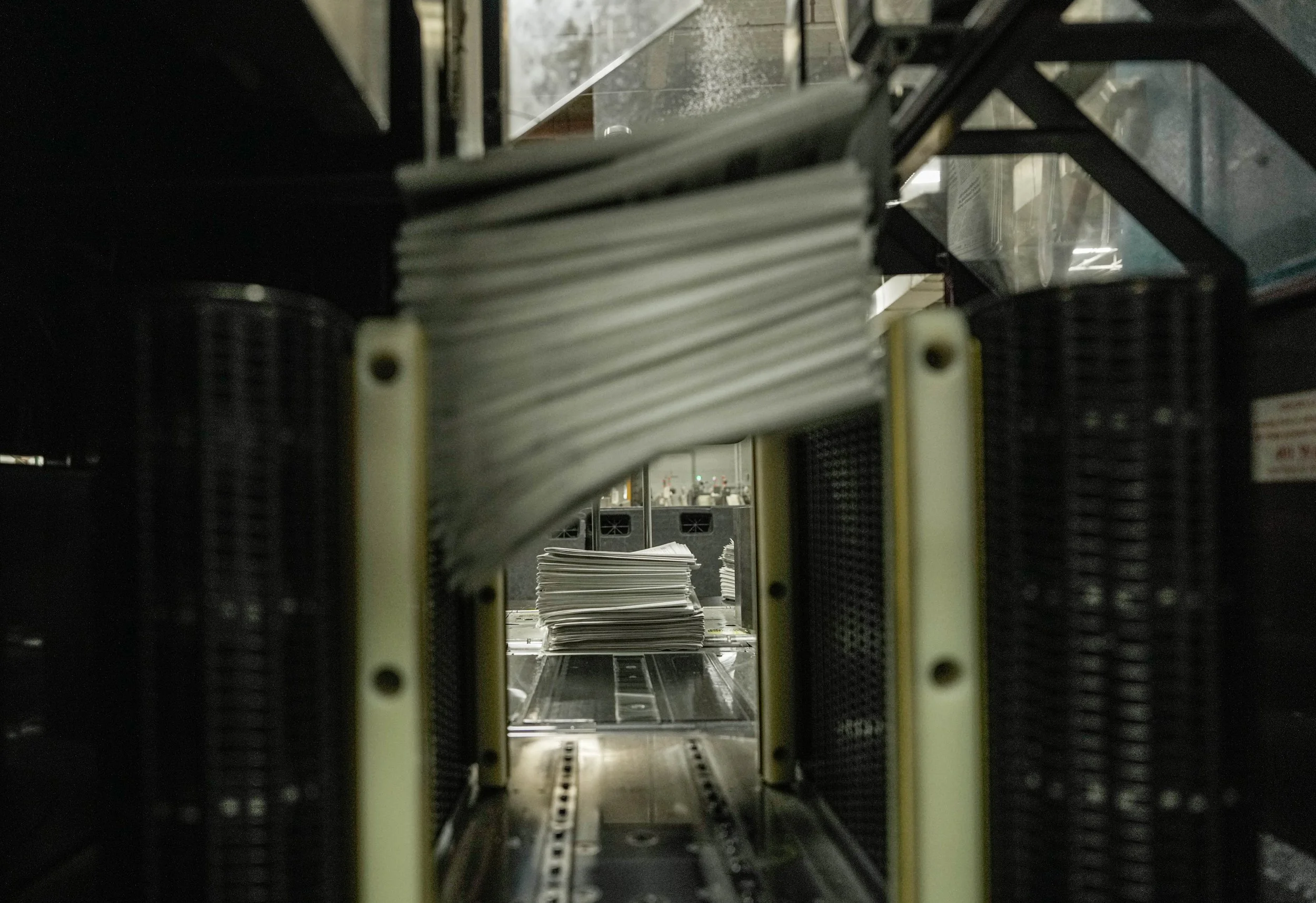
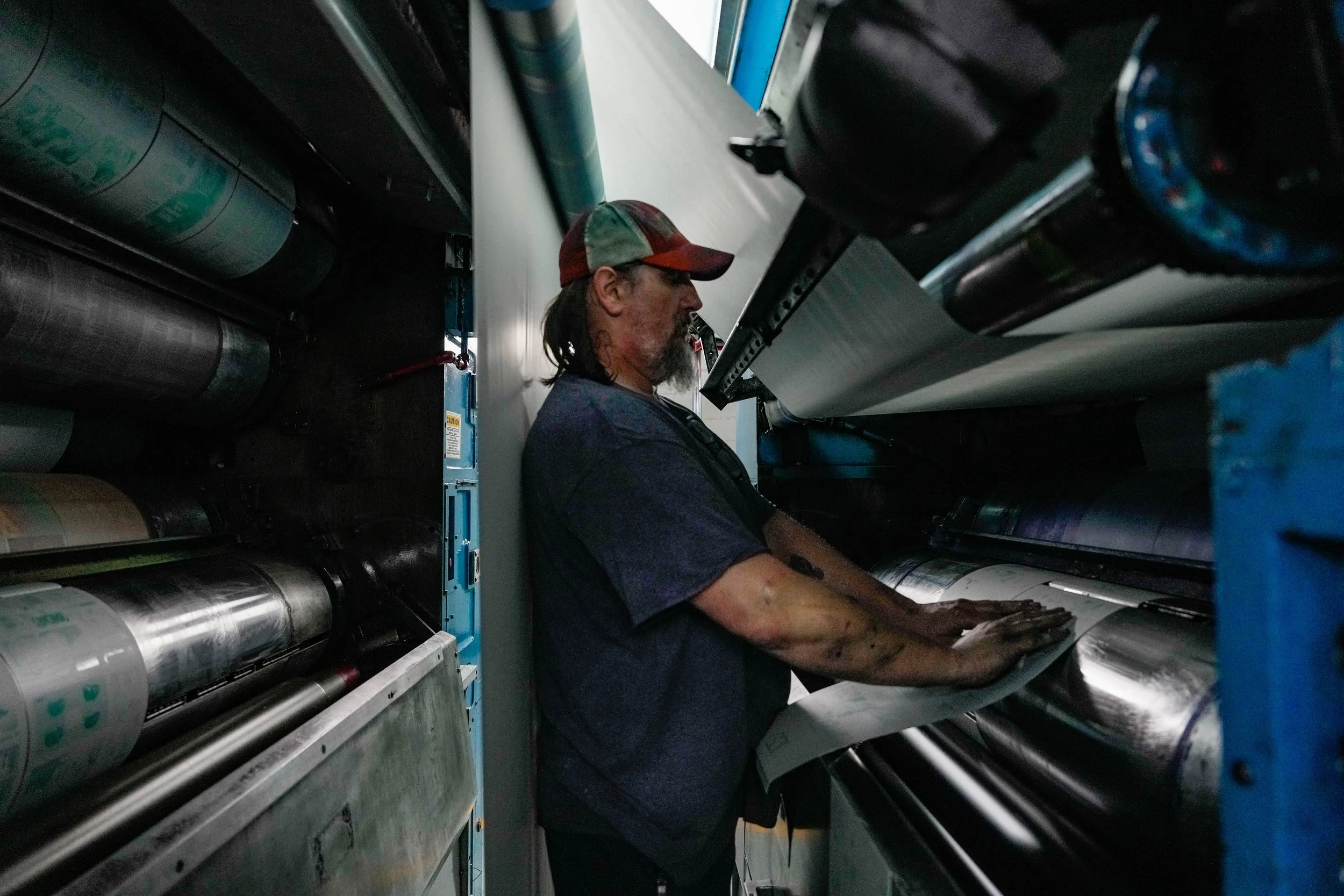
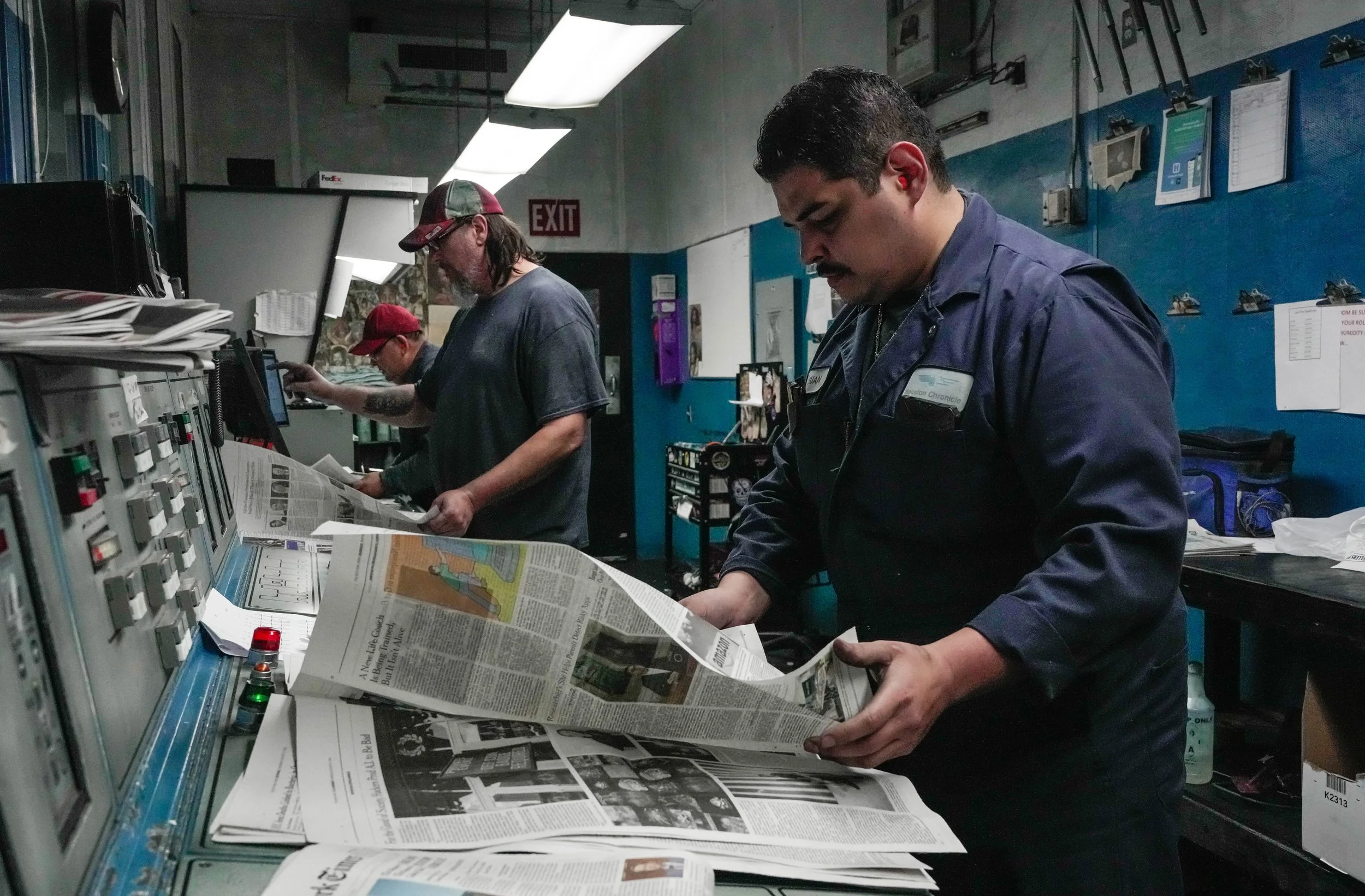
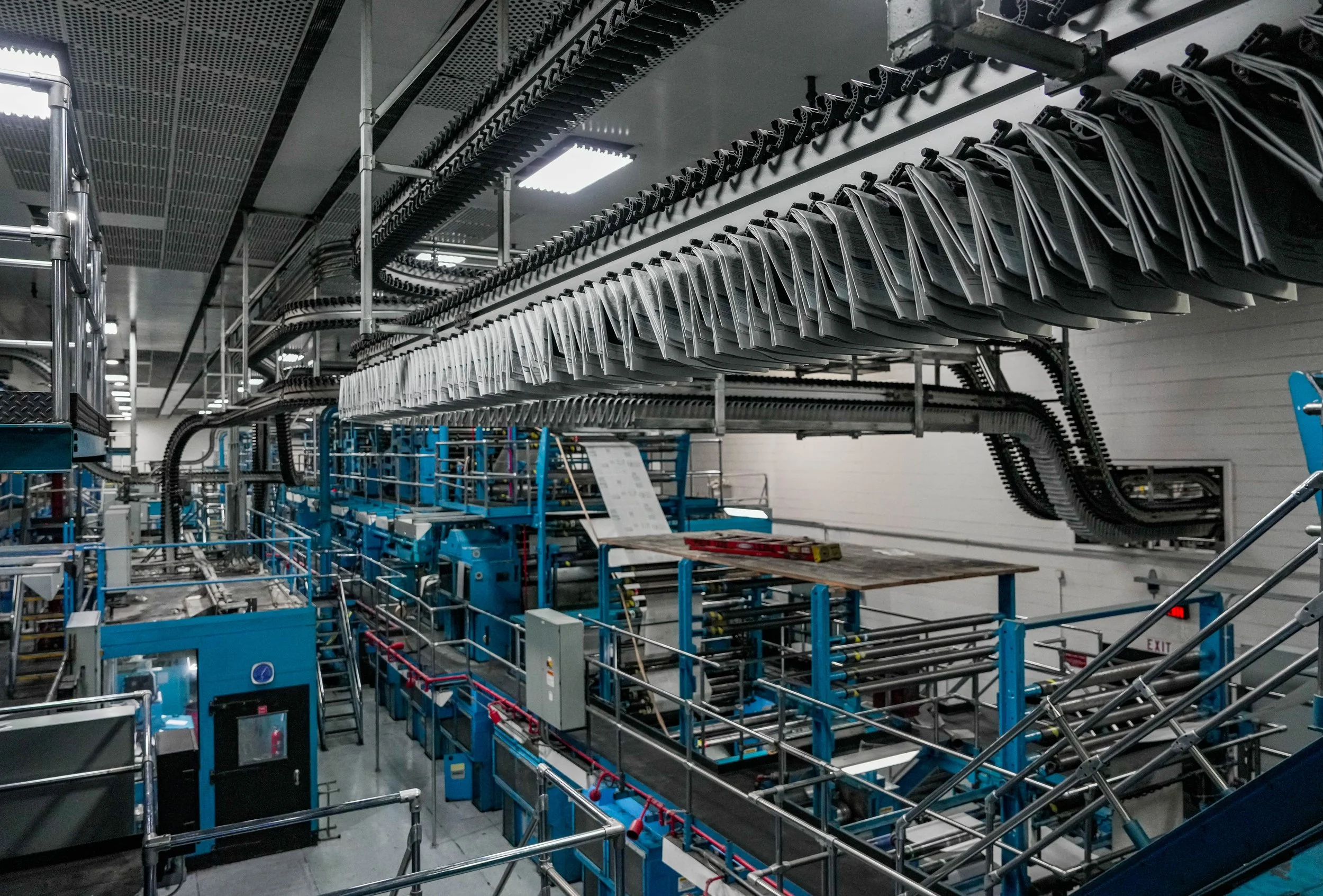
The first time I stepped onto the press floor, I felt it before I saw it. It stretched the length of the room, loud and relentless, paper flying through rollers faster than the eye could follow. Press operators stood beside it, shirts marked with ink, hands steady, reading the rhythm of steel and motion the way someone reads a pulse. I watched a wide roll of blank newsprint feed into the machine, untouched, silent, almost fragile. Seconds later, it emerged carrying headlines, photographs, columns of text. A record of the day, still warm. There is something astonishing about witnessing the moment before words and images exist on paper, and the instant they do. It takes a coordinated effort — operators loading massive rolls of paper, others mounting plates onto cylinders, others adjusting ink density by fractions and inspecting test sheets as they come off the line. One misalignment can ripple across thousands of copies. Someone is always watching. When we think of a newsroom, we often picture reporters on deadline, editors refining language, photographers transmitting images. Rarely do we picture the people who physically print the paper, the ones who stand beside steel and motion in the middle of the night, ensuring the final product is precise, aligned and on time.
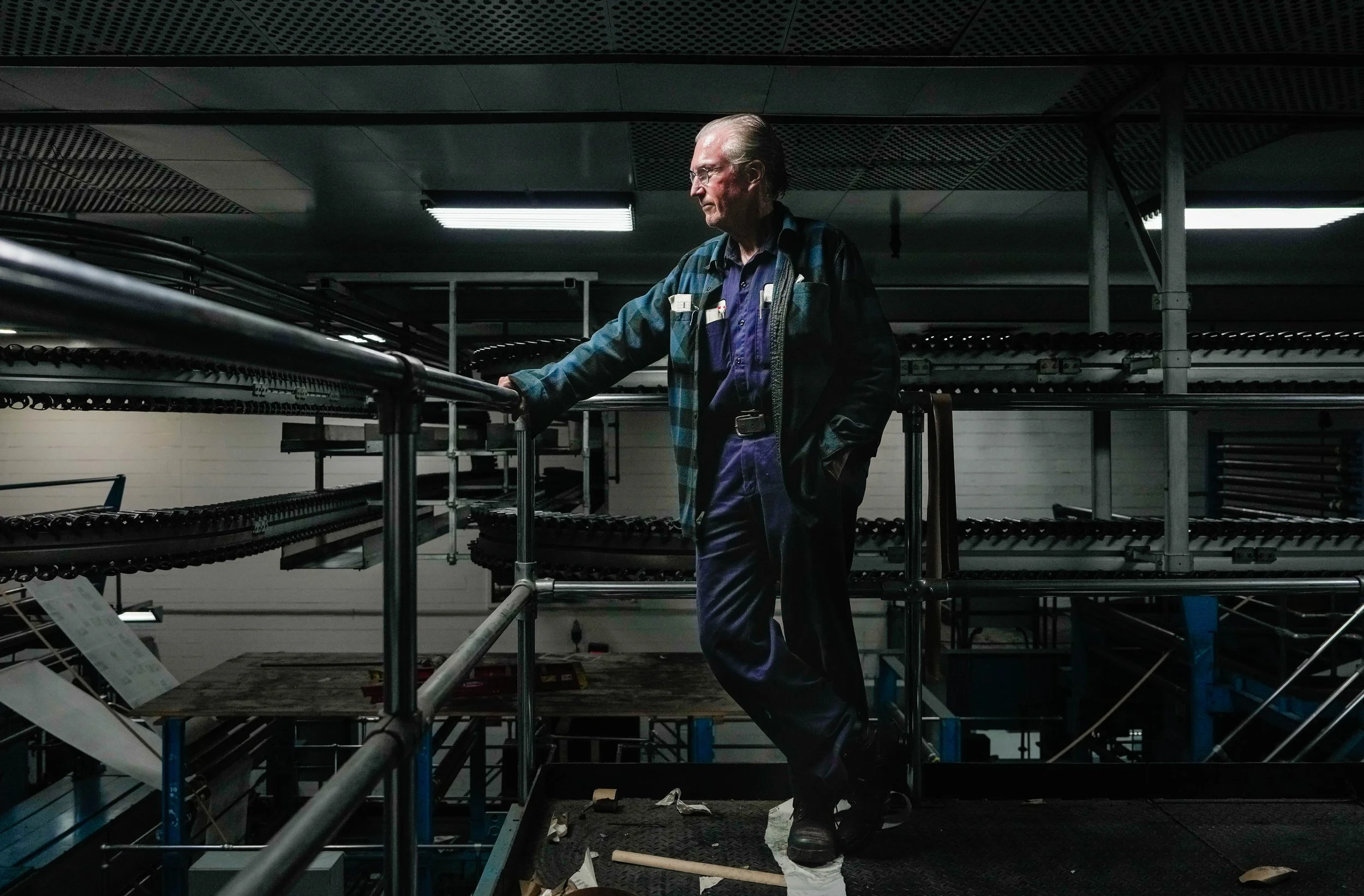
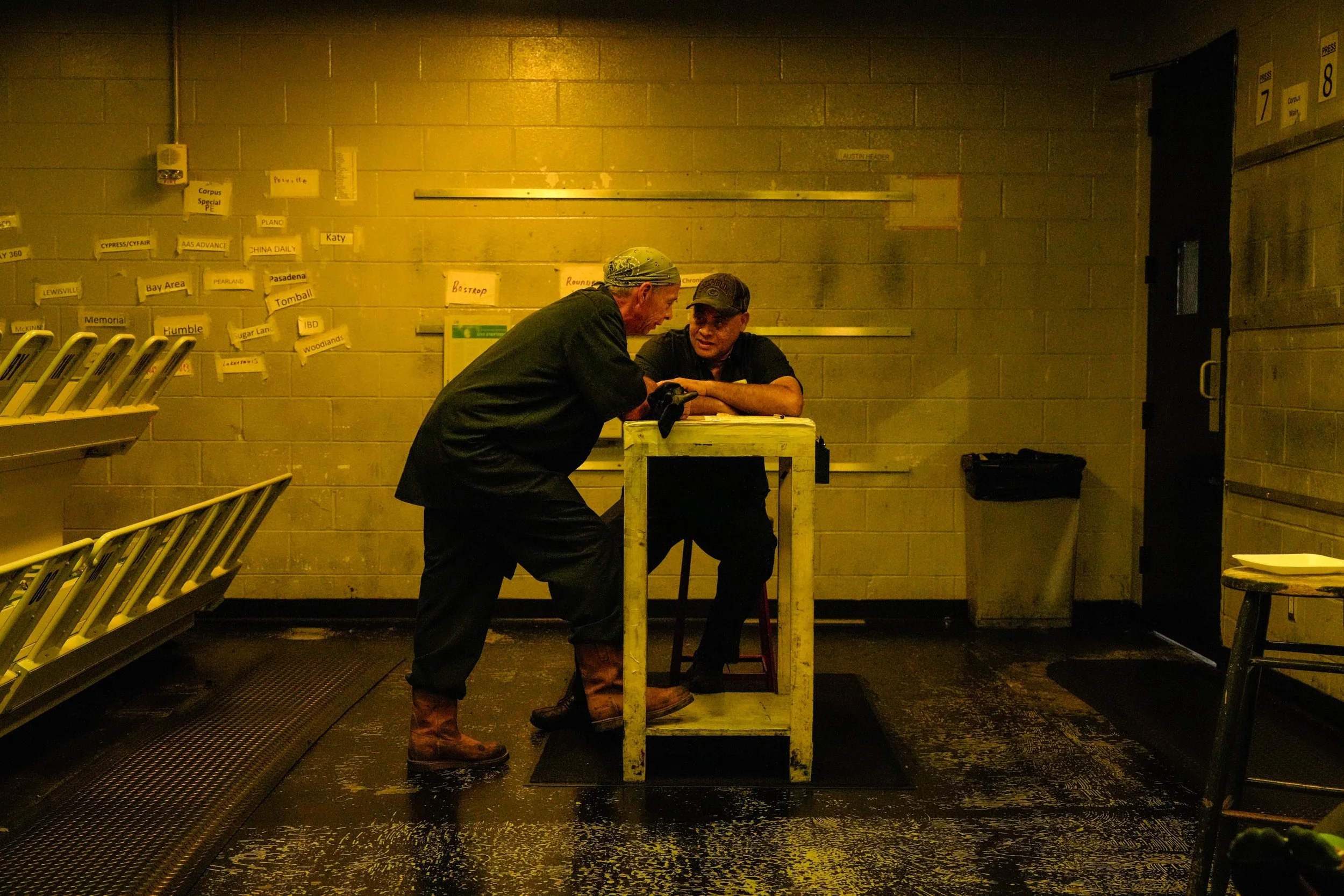
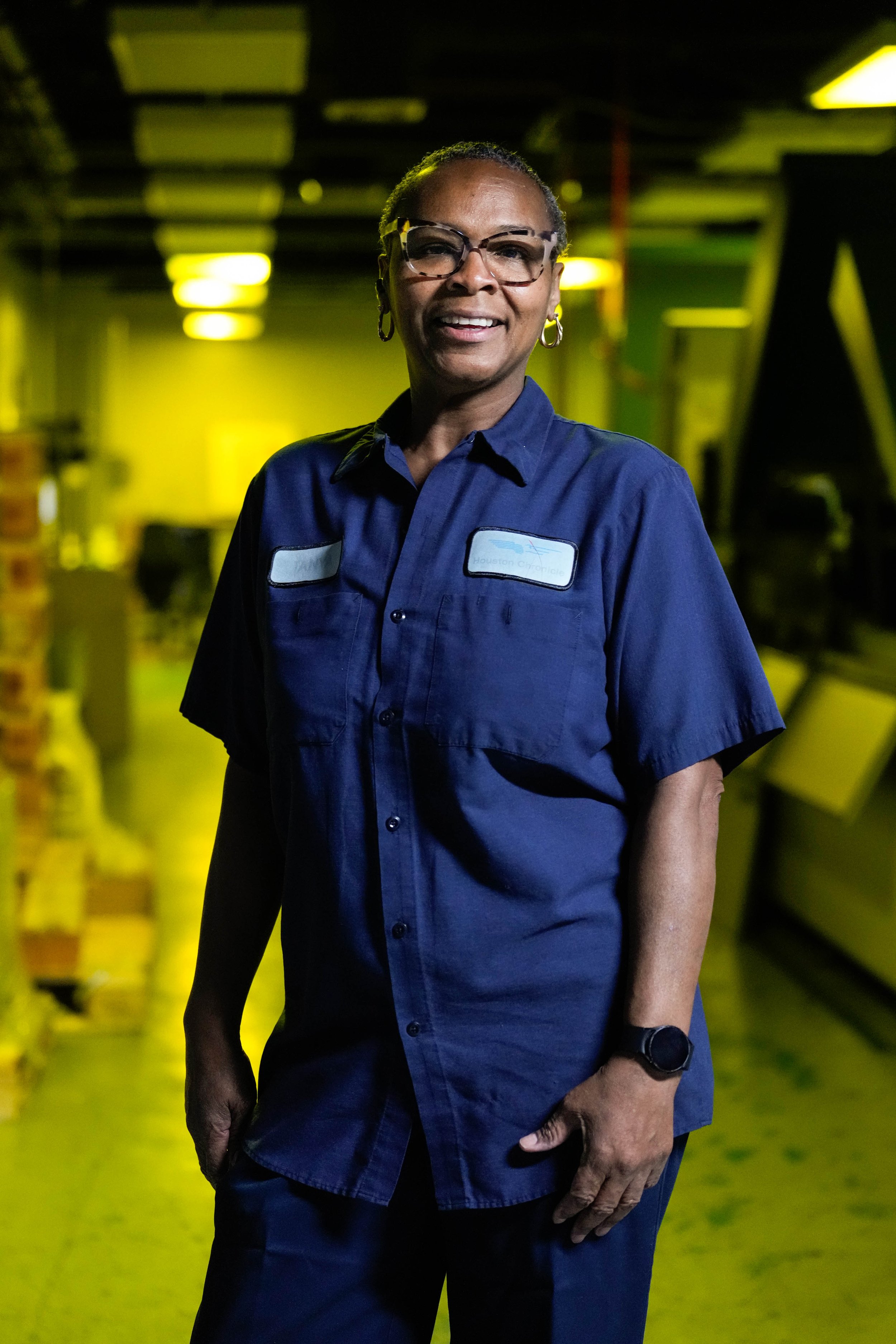
For many of the press operators at the Houston Chronicle, this is not just a job. It is a craft carried across generations. Some learned it from fathers and grandfathers who ran presses before them. Others arrived decades ago and stayed, mastering a system built on muscle memory, timing and instinct. There is pride in their work, but also duty.
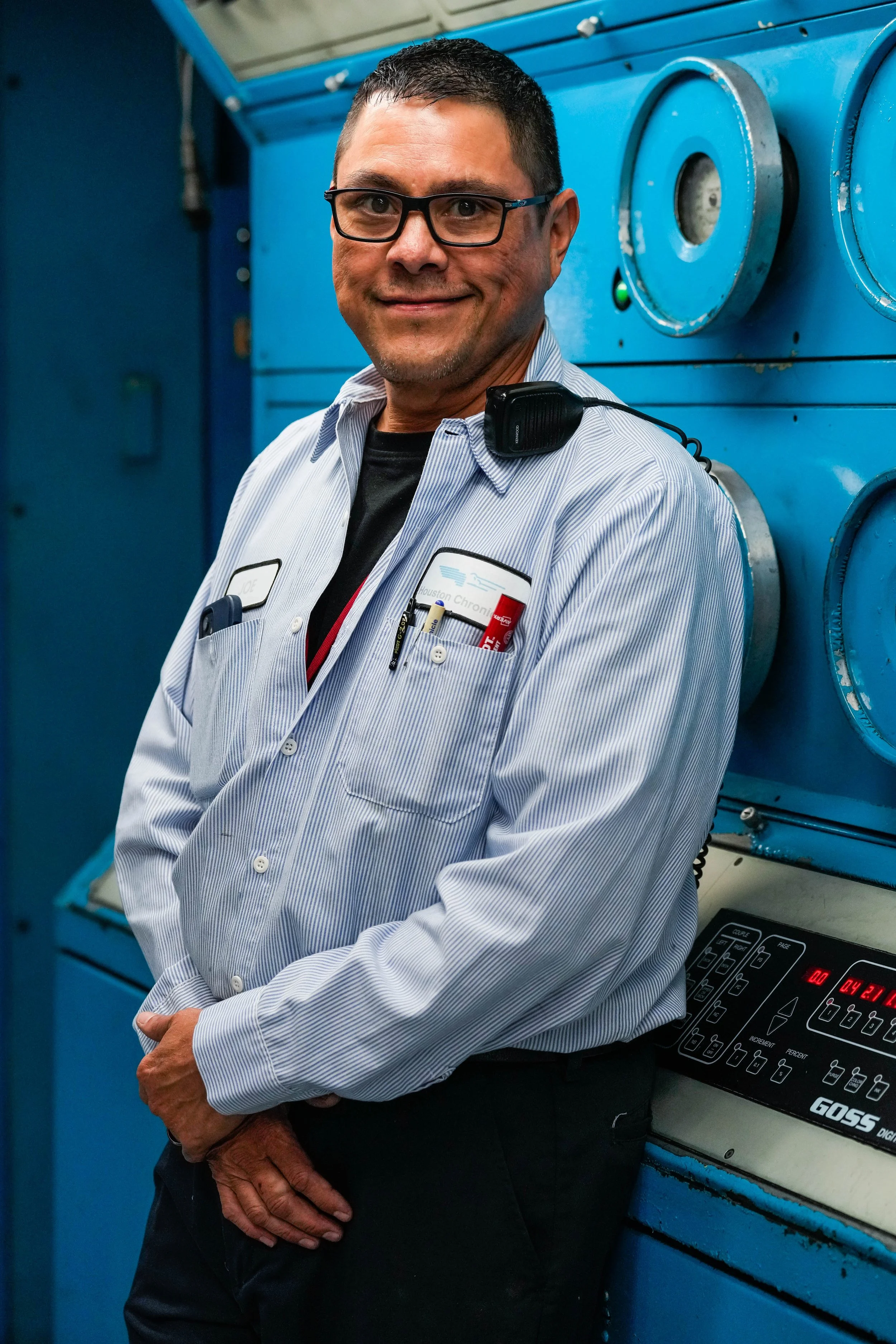
“This is the last stop before it goes out,” pressman Joe Mireles told me during one of my early visits. “Once it leaves here, that’s it. That’s what people see.”
The pressroom is where everything converges. Reporting, photography, editing, all of it becomes physical here. Ink meets paper. Files become form.
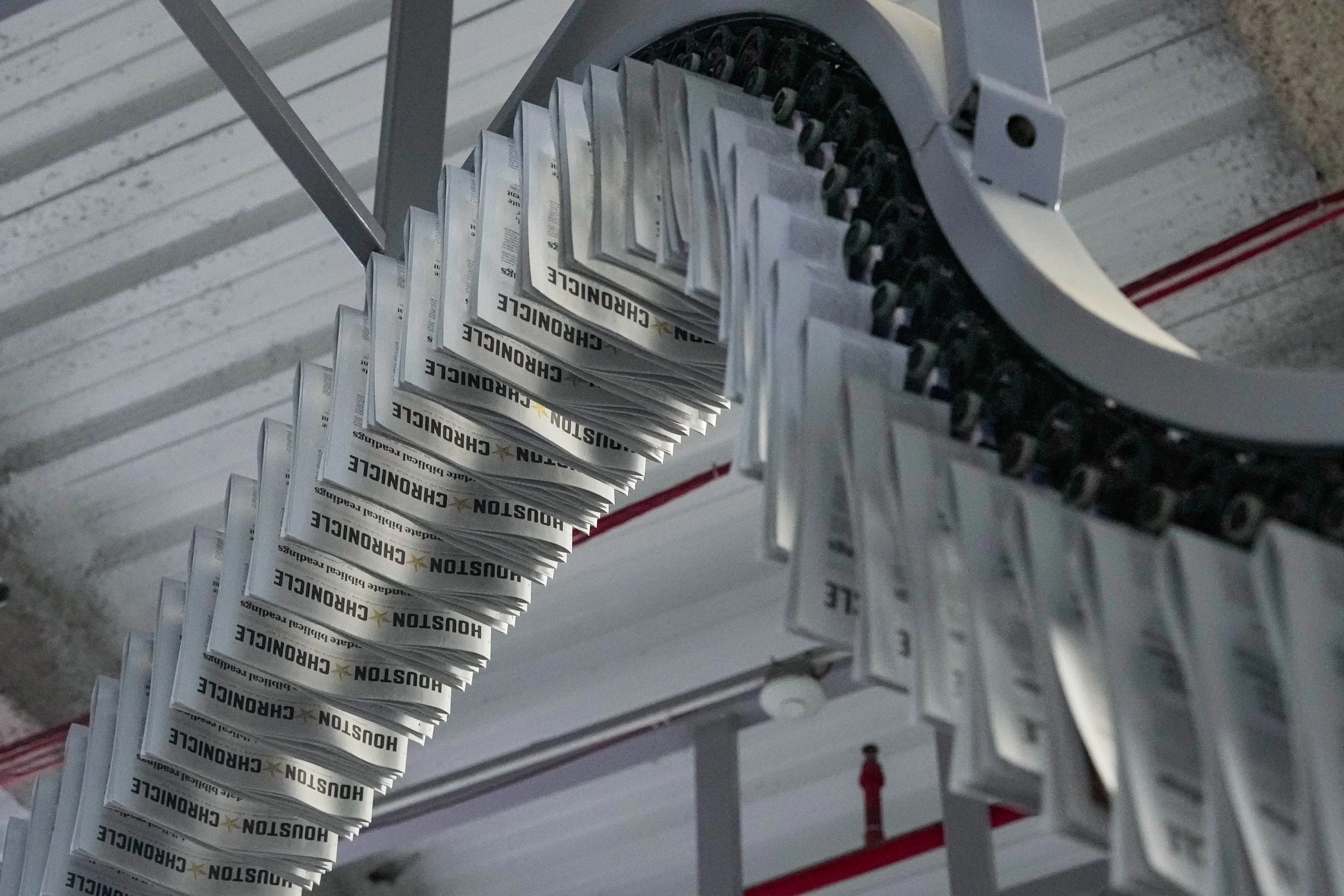
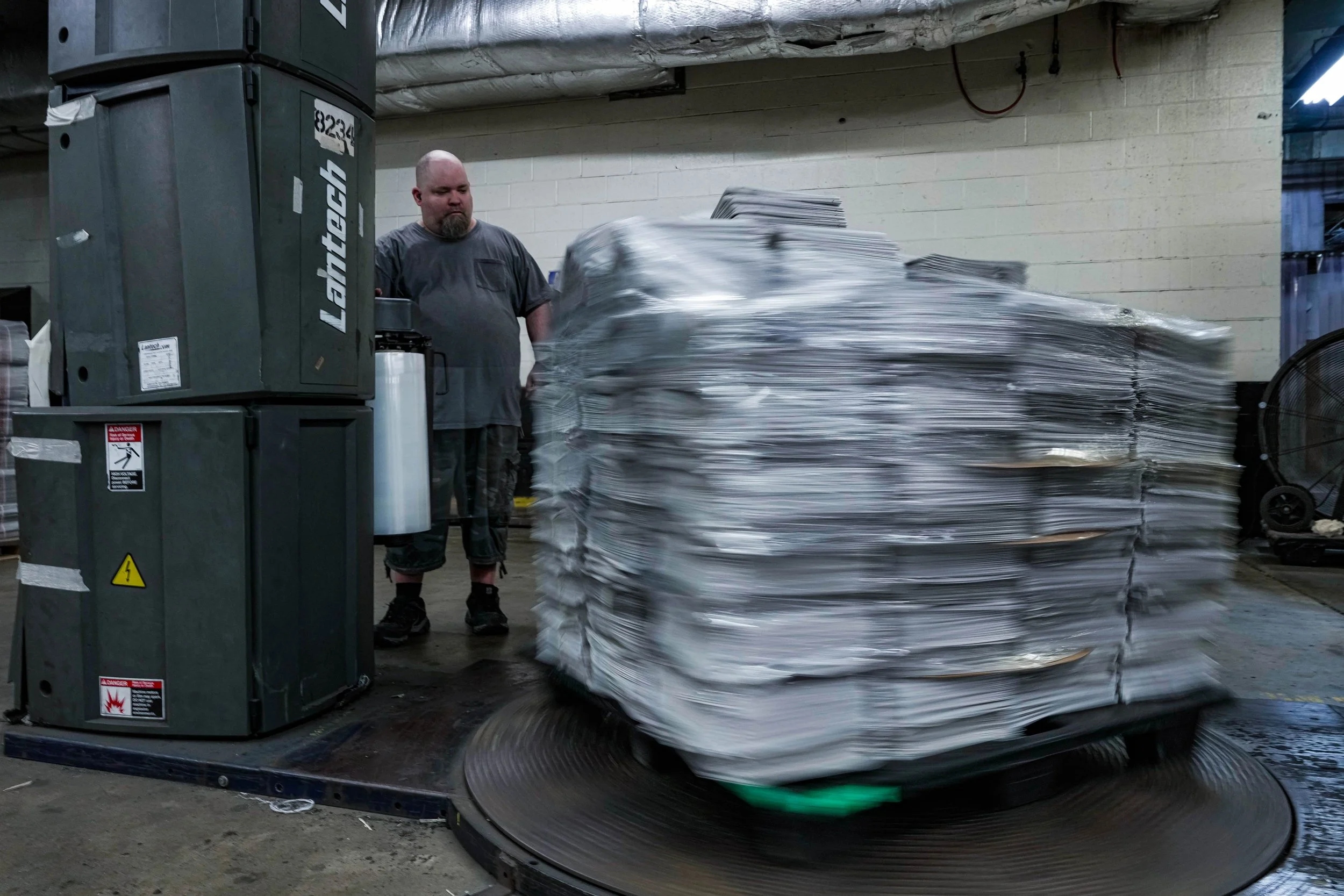
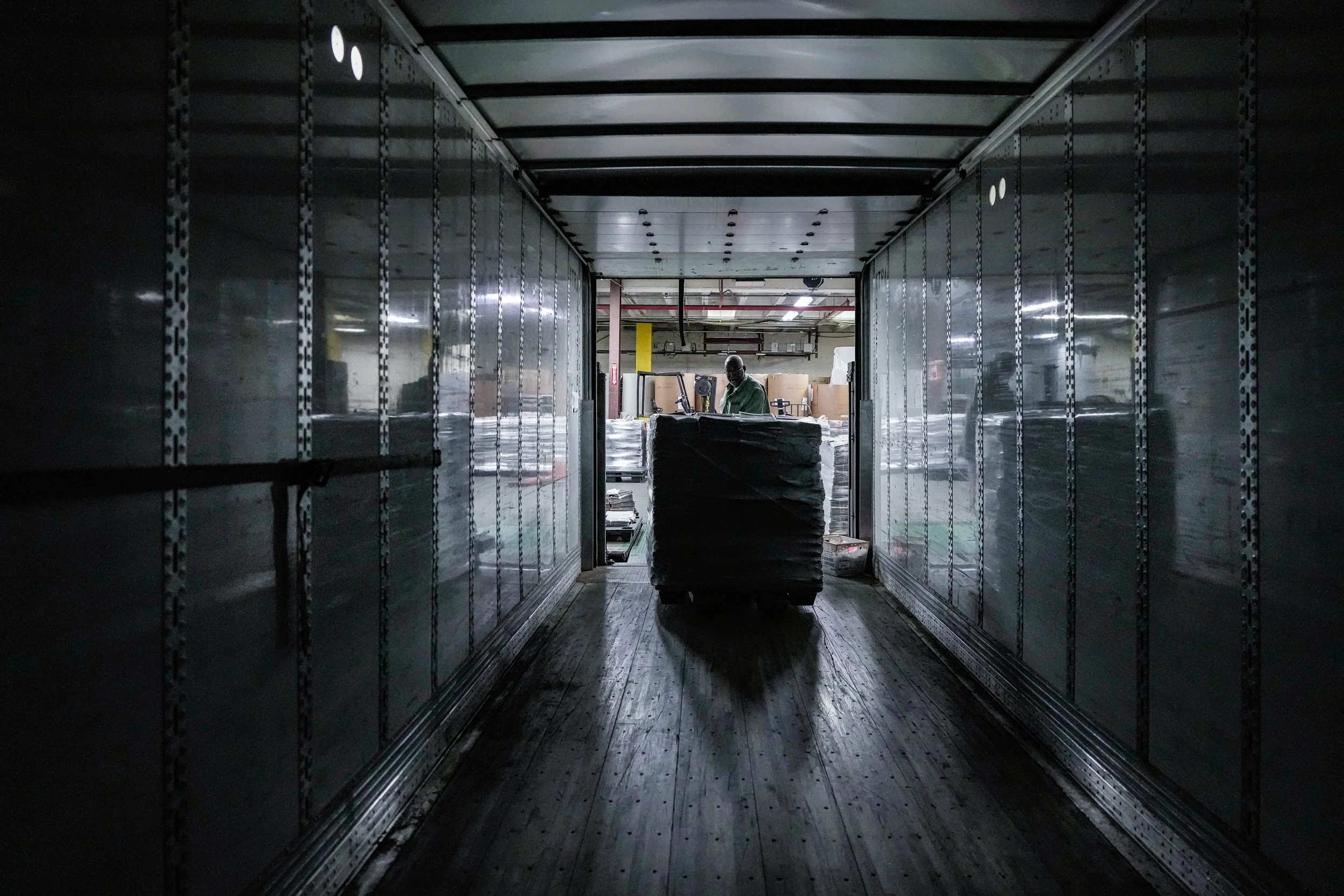
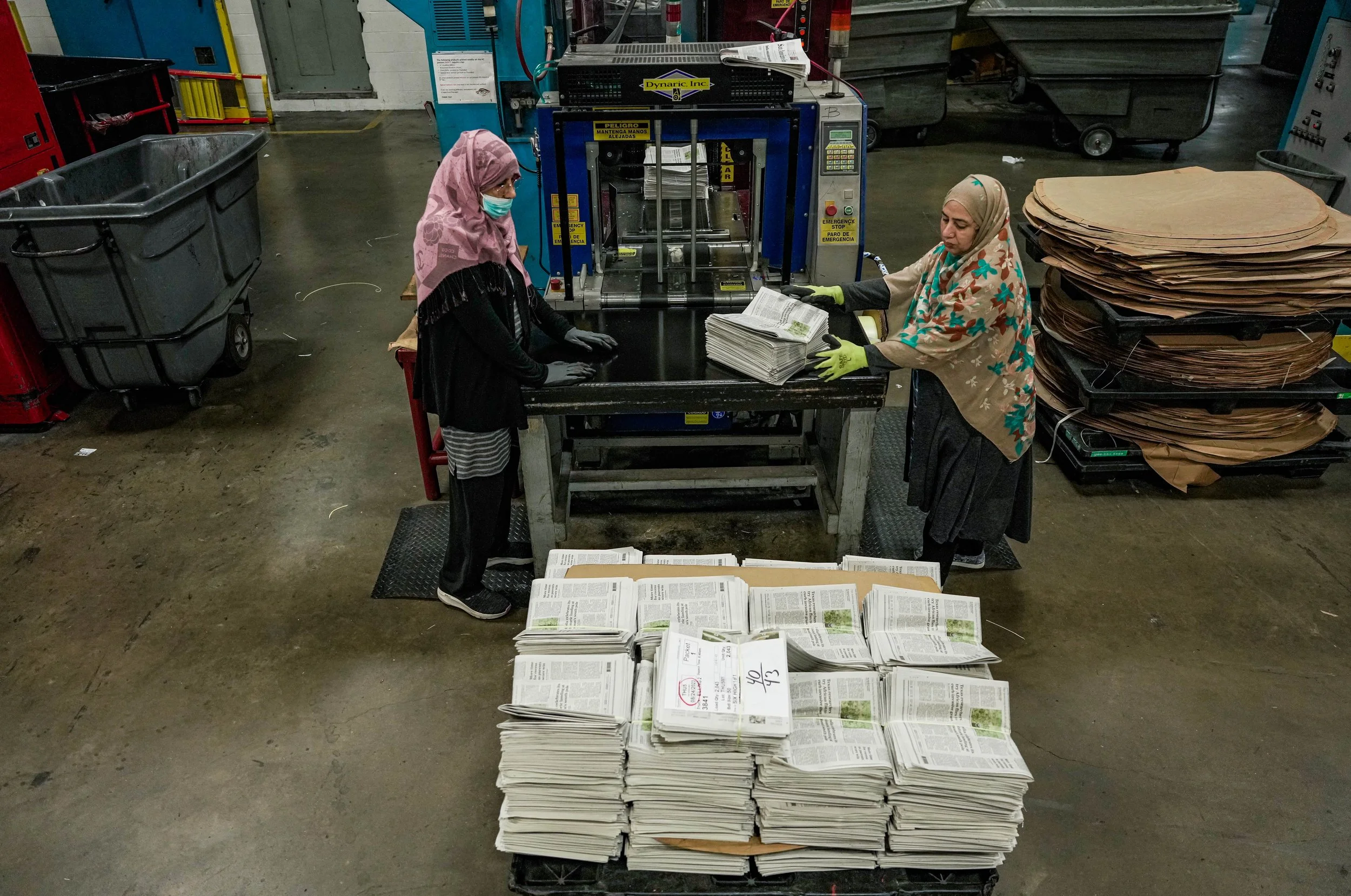
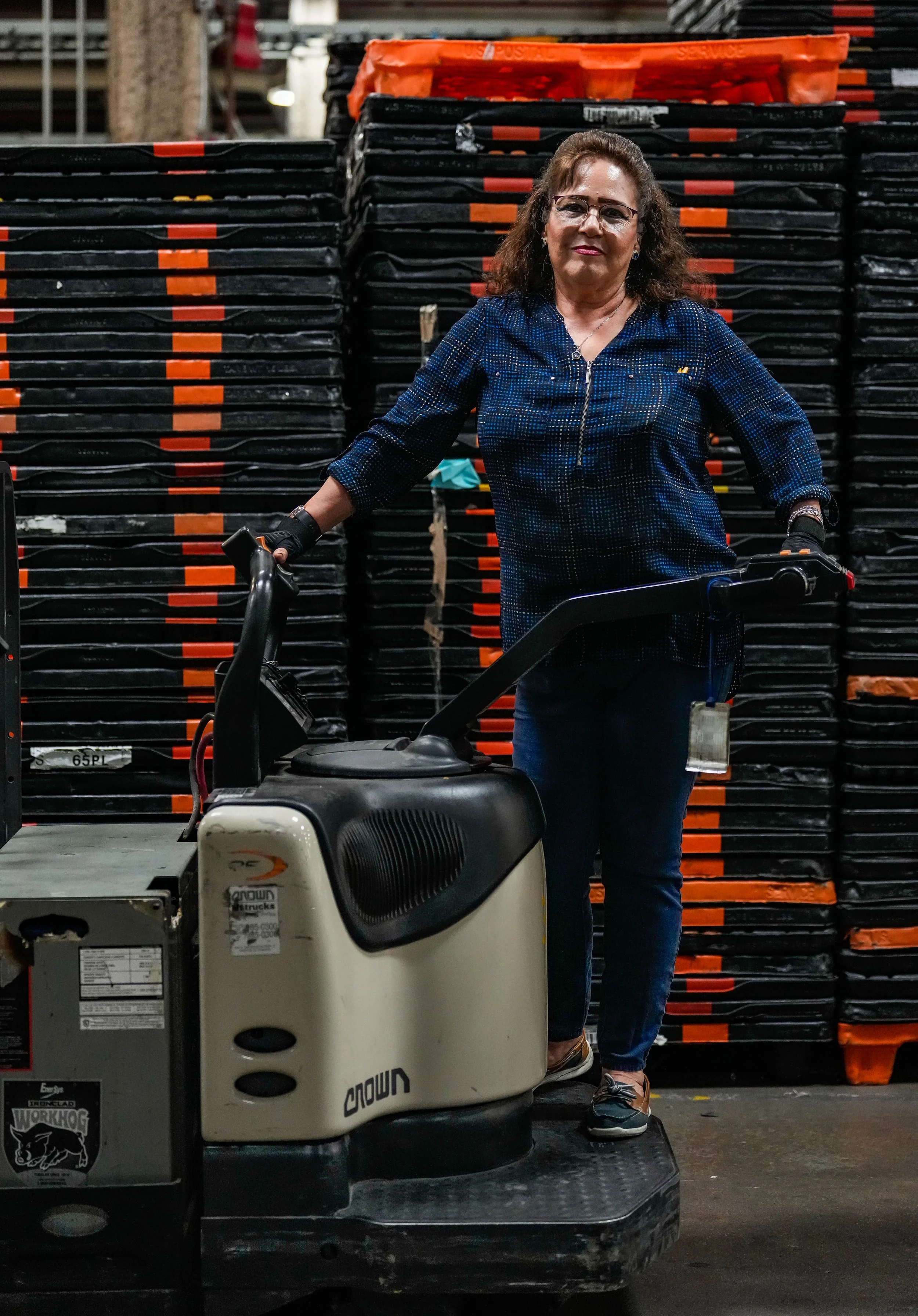
Over the next year and a half, I returned again and again, following the process from blank roll to bundled stack. I watched plates mounted onto cylinders, color adjusted by fractions, test sheets discarded and recalibrated. I watched bundles wrapped and loaded while the city slept. I stood outside before sunrise as delivery trucks pulled away toward neighborhoods across Houston. There is a quiet discipline to this work. It happens mostly out of view. It happens on schedule, regardless of weather or headlines.
“We have a duty to keep printing it,” Mireles said during an earlier conversation. “People still want it. They’re still waiting for it.”
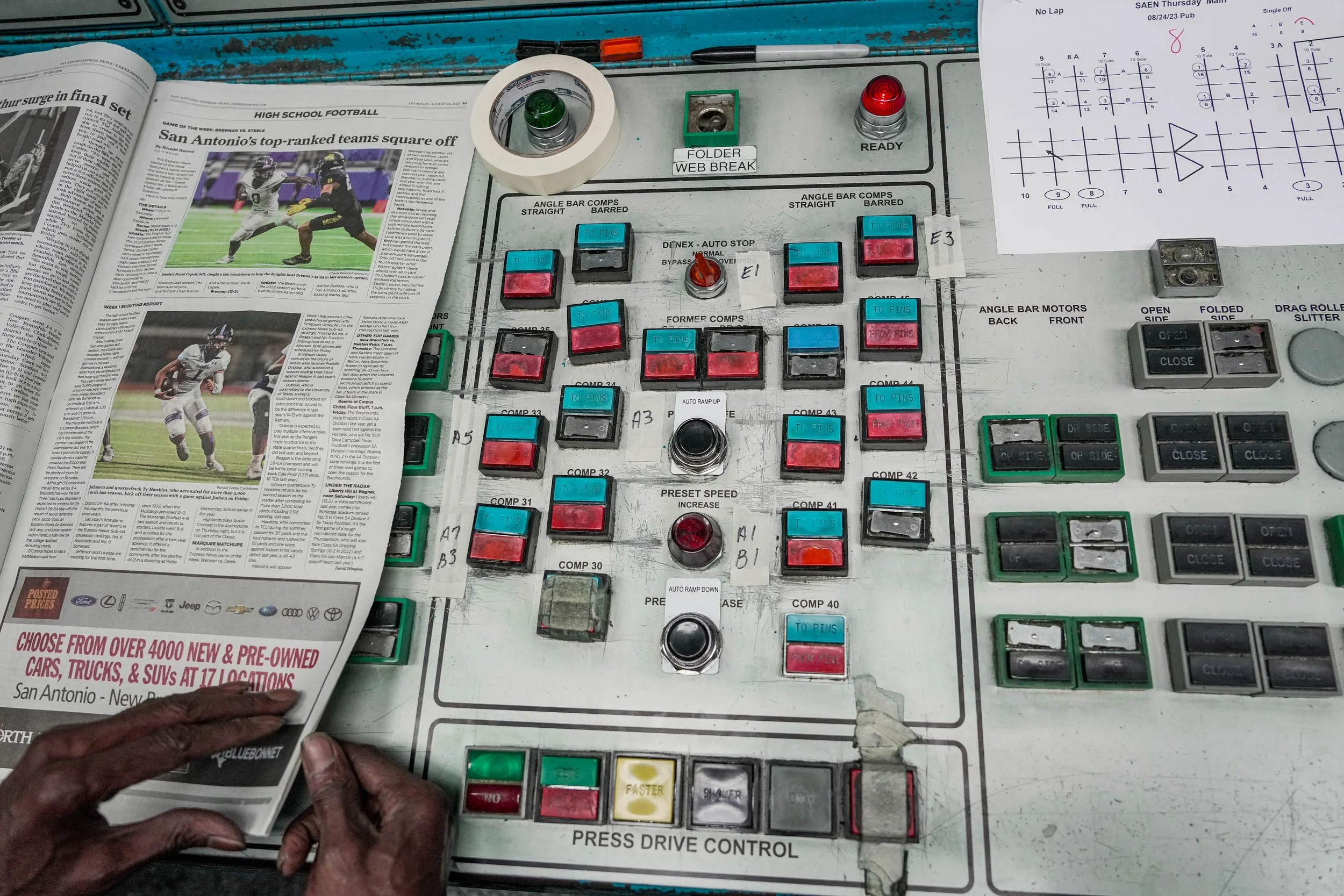
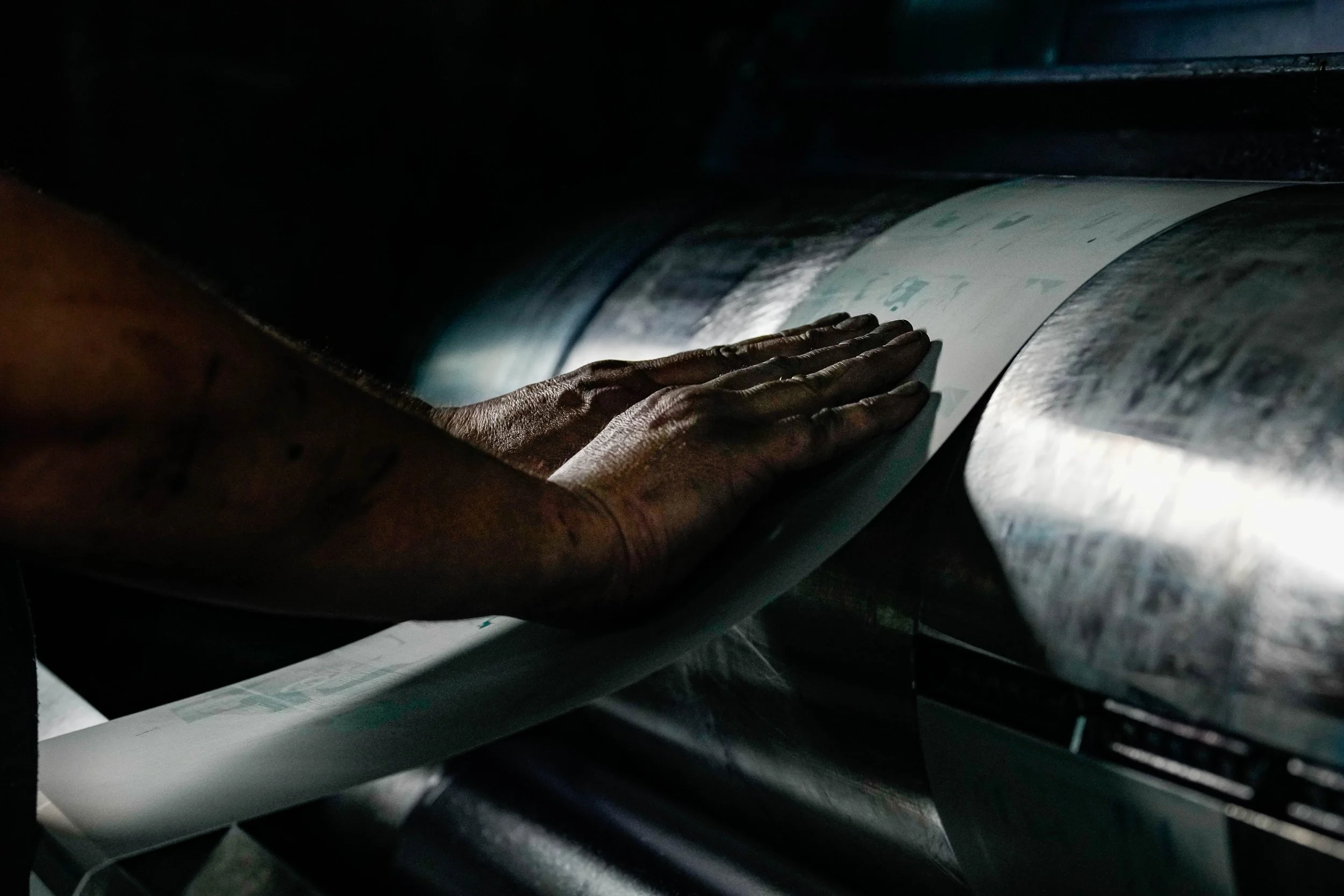
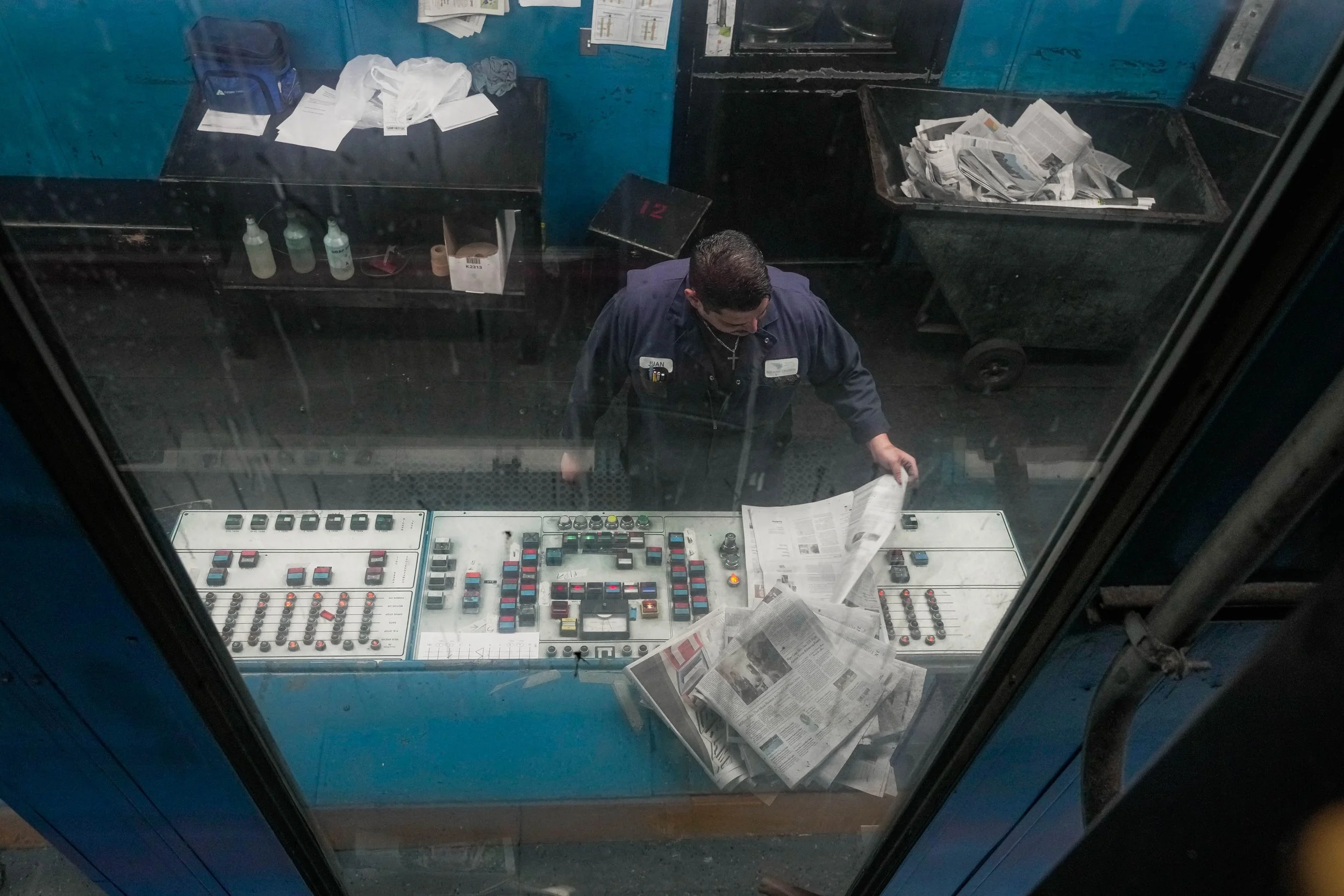
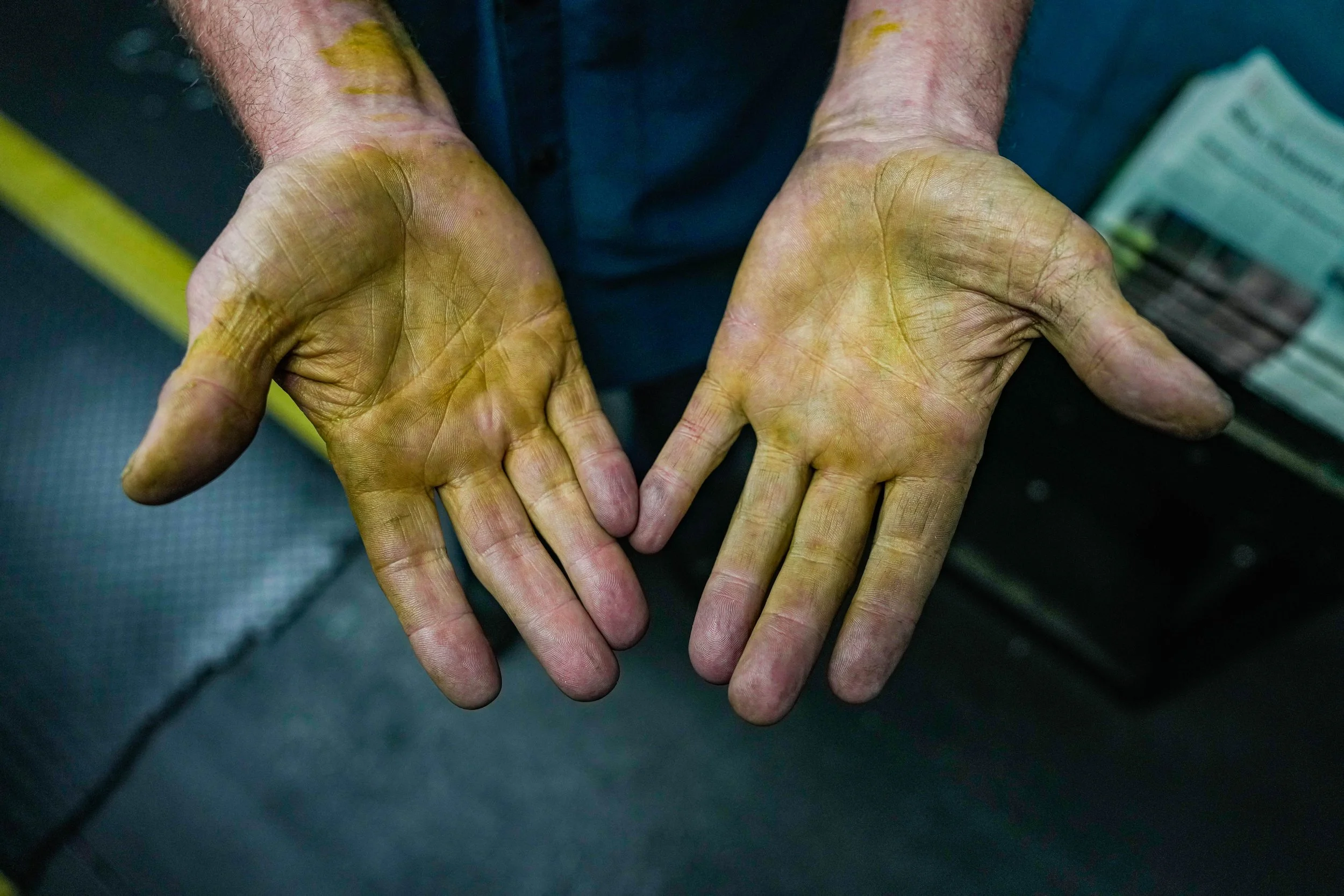
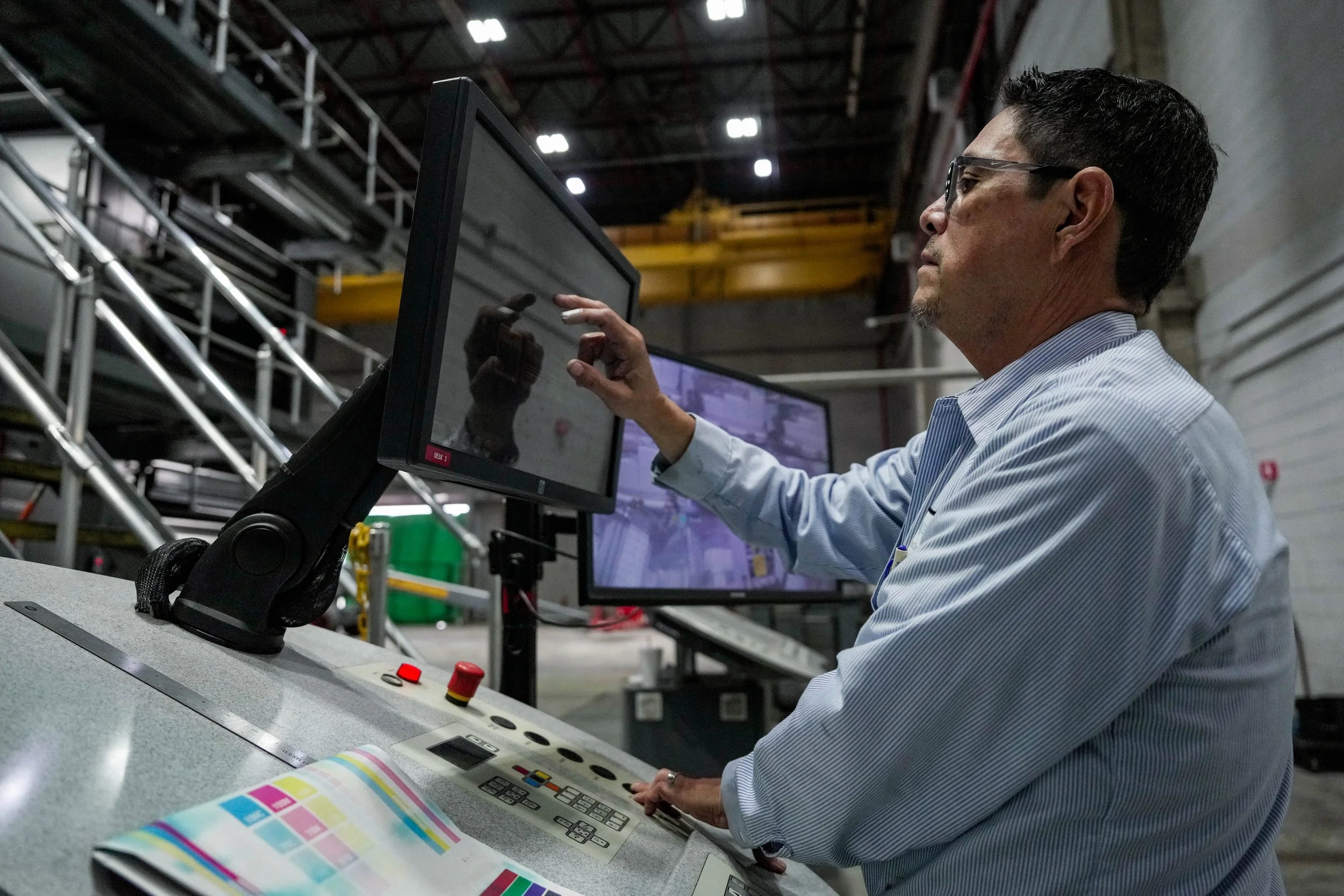
Even with new technology, that responsibility remains. The recently installed press is faster, more automated, guided by digital controls instead of analog dials. Operators who spent decades reading gauges and listening for subtle shifts are now learning software interfaces and diagnostic screens. The workflow has changed. The machinery is different. But the purpose is the same. The new press represents adaptation and investment. It marks a new chapter for the Chronicle. Yet the heart of the operation is unchanged, people who know how to read ink density by sight, who can sense tension in the web of paper, who understand that what rolls off the line will land on doorsteps before dawn. These photographs move between generations of machines, the original press that carried decades of Houston history and the new one beginning its own run. Between ink-stained gloves and glowing monitors. Between steel and software.
Before most of the city wakes, this is where the newspaper comes to life. And it has always depended on the hands that guide it.
Written and Photographed by Raquel Natalicchio for the Houston Chronicle.